
Videos · Guides · 20 Dec 2024 · 14 min
Eating in Thailand: the mistakes that make you ill or overpay
Street food is mostly fine. The real risks are food left standing in the heat, tourist-trap menus, touts and a few habits worth changing.
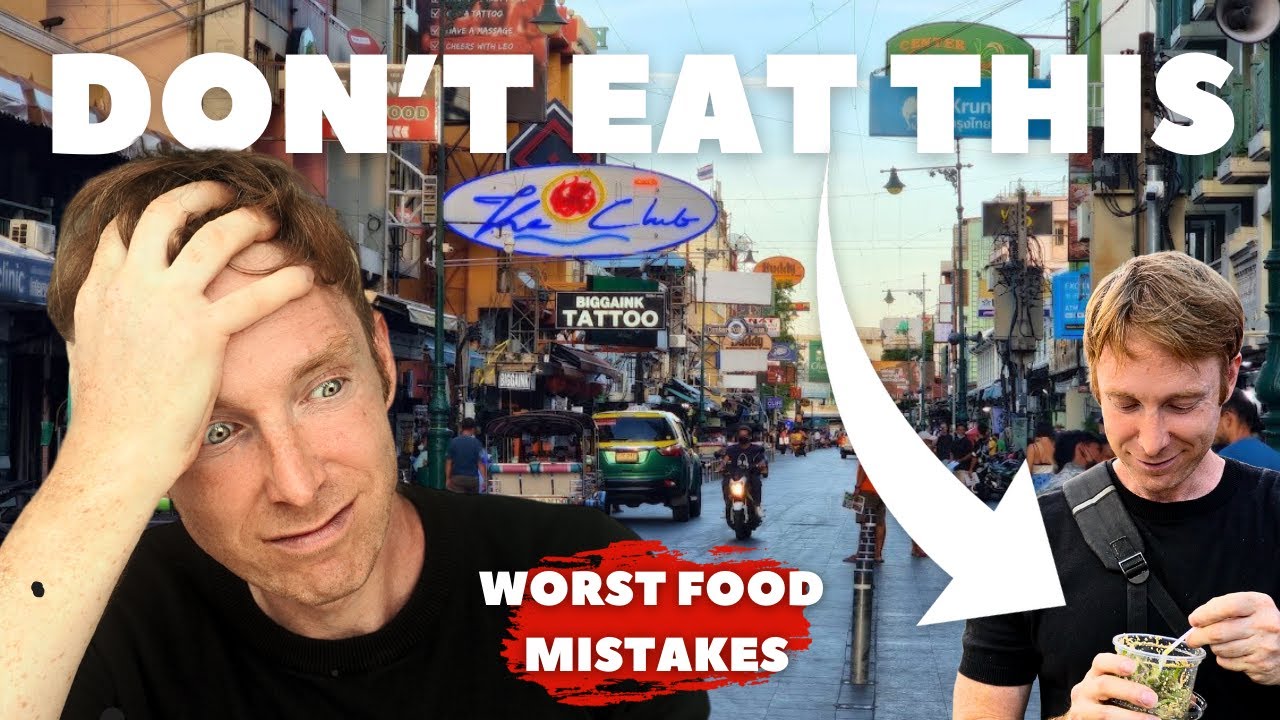
Video: Food in Thailand - 25 Worst Mistakes To Avoid
The short version
- Eat where Thai customers queue and the food is cooked in front of you.
- Be wary of food that has sat out in the heat, such as buffet trays, market sushi, cut fruit and hotel buffets.
- Ask the price before you order, and ignore restaurant tips from taxi, tuk-tuk and street touts.
- Order several dishes to share, and say how spicy you want them.
- Drink bottled or filtered water, wash market fruit and vegetables, and carry rehydration salts.
- Eating and drinking on the BTS is not allowed.
Thai food is one of the great pleasures of a trip, and most of it is safe to eat. Most food trouble comes down to a few avoidable habits: food that has sat in the heat, a recommendation from the wrong person, and water from the wrong tap. Change those and you can eat almost anywhere.
Who this is for: first-timers who are nervous about street food, and anyone who has had a bad week of eating here and wants to know why. Who can skip it: residents who already eat street food daily.
Street food is not the enemy
Don’t skip street food out of fear. Food poisoning is relatively rare, and a cook working over a flame in front of you is easier to judge than a kitchen behind a door. You can see what goes in the pot, how fresh it is and how clean the stall is.
The catch is that Bangkok’s heat is hard on food. A few rules cover most of the risk:
- Choose food cooked to order and served hot. Be cautious with the tray-and-rice shops where dishes sit in the open, especially in your first days when your stomach isn’t used to it.
- Be wary of raw fish and cut fruit. Sushi sold at markets, pre-cut fruit and blended smoothies pass through the most hands, boards and water. If the vendor’s area looks grubby, walk on, especially at beach spots.
- Don’t assume expensive means safe. Hotel and international buffets can be a source of stomach trouble. Food sits out for long periods and you can’t see how it was handled.
A mild upset stomach is the more likely result than true food poisoning. It is miserable if you have a packed itinerary, so go gently for the first few days.
How to pick a restaurant
Follow the Thai customers. A restaurant full of tourists and no Thai customers often depends on one-time visitors and has little reason to keep standards up. A busy room of locals means fast turnover, fresh ingredients and fair prices, because those customers come back every week.
The rule works anywhere: find the busiest place, join the queue and eat what everyone else is eating. It is also the easiest way to try dishes you couldn’t name.
Order like a Thai table
- Share. Thai meals are built around several dishes in the middle of the table with rice for everyone. You’ll taste far more, and it fixes the other problem: dishes arrive in no set order, so a person ordering a single plate can wait a long time after everyone else has eaten.
- Try regional food. Northern, northeastern, southern and central Thai cooking are quite different. The Thai restaurant at home showed you a small slice.
- Say how spicy you want it. Thai heat can wreck your stomach. The three phrases that matter are mai phet (not spicy), phet nit noi (a little spicy) and phet mak (very spicy). Go mild first and add chilli at the table.
- Go easy on deep-fried street snacks. Most Thai food is lighter than Western takeaway, but fried snacks cooked in reused oil shouldn’t be a daily staple.
Prices, touts and tourist traps
Don’t haggle over food. Bargaining belongs in markets, for clothes and electronics. At a food stall or restaurant the price is the price.
Do ask the price before you order. Almost every vendor is honest, but in the busiest tourist areas some will overcharge visitors who don’t ask. If there’s no menu and no price, ask.
Ignore restaurant tips from taxi drivers, tuk-tuk drivers and touts. A familiar Bangkok scam (see scams in Thailand) sends tourists to an overpriced seafood restaurant, with the driver collecting a commission.
The same goes for gem shops and “special” attractions. A stranger who approaches you in a tourist area with a recommendation is often working for someone.
Apps worth having
Grab Food and LINE MAN both deliver from restaurants and many street vendors; compare the delivery fee in both before you confirm.
Don’t live on Western food. It costs more here than Thai food and is rarely better. For a cheap, quick meal, use a food court in a shopping mall, where dozens of stalls sell cooked-to-order Thai dishes for a fraction of a restaurant bill.
Water and fruit
- Wash market fruit and vegetables well. Storage and transport leave plenty of chances for contamination.
- Drink bottled or filtered water. Tap water is fine for showering; for brushing teeth, use bottled water if you prefer. Bottled water is cheap and sold at every convenience store.
If you get sick
- Carry oral rehydration salts. They are sold at every pharmacy and are the standard first treatment for a stomach upset. Mix them with bottled water and sip often.
- Skip self-medicating with antibiotics; see a doctor. Pharmacies here will sell them easily, but they only help with some infections, and taking them unnecessarily can make things worse.
- See a doctor if you can’t keep fluids down, have a high fever, see blood, or aren’t improving after a day or two. Bangkok has many private hospitals with English-speaking staff, and a drip often turns a bad day around.
- Have health insurance. A private hospital bill adds up fast, so check what a policy excludes before you buy. Healthcare in Thailand has what treatment costs.
One rule for the train
Don’t eat or drink on the BTS. It is not allowed in the stations or on the trains, and you can be fined, so finish the snack before you tap in.
Chapters
Watch next
 35 minCondo & house tours · $2,500/month · Written guideA 145 m² Soi 8 corner condo for 85,000 baht, down from 110,00028 Oct 2026
 28 minGuides · Written guideYour first hour in Bangkok: Suvarnabhumi arrival, step by step23 Oct 2026
 48 minGuides · Written guideThailand first visit: fewer stops, the free arrival card, app rides29 Jun 2026
Thailand, every Thursday.
One email a week. Free, and you can leave in one click.
- What's on in Bangkok this weekend
- Entry and visa changes, in plain English
- One guide worth reading, kept up to date