
Videos · Guides · 21 May 2025 · 13 min
Thailand in the rainy season: which coast to pick, and when
Go, but choose the coast by the month. Bangkok, the north and the Andaman are wet from May to October; the Gulf islands turn wet after that.
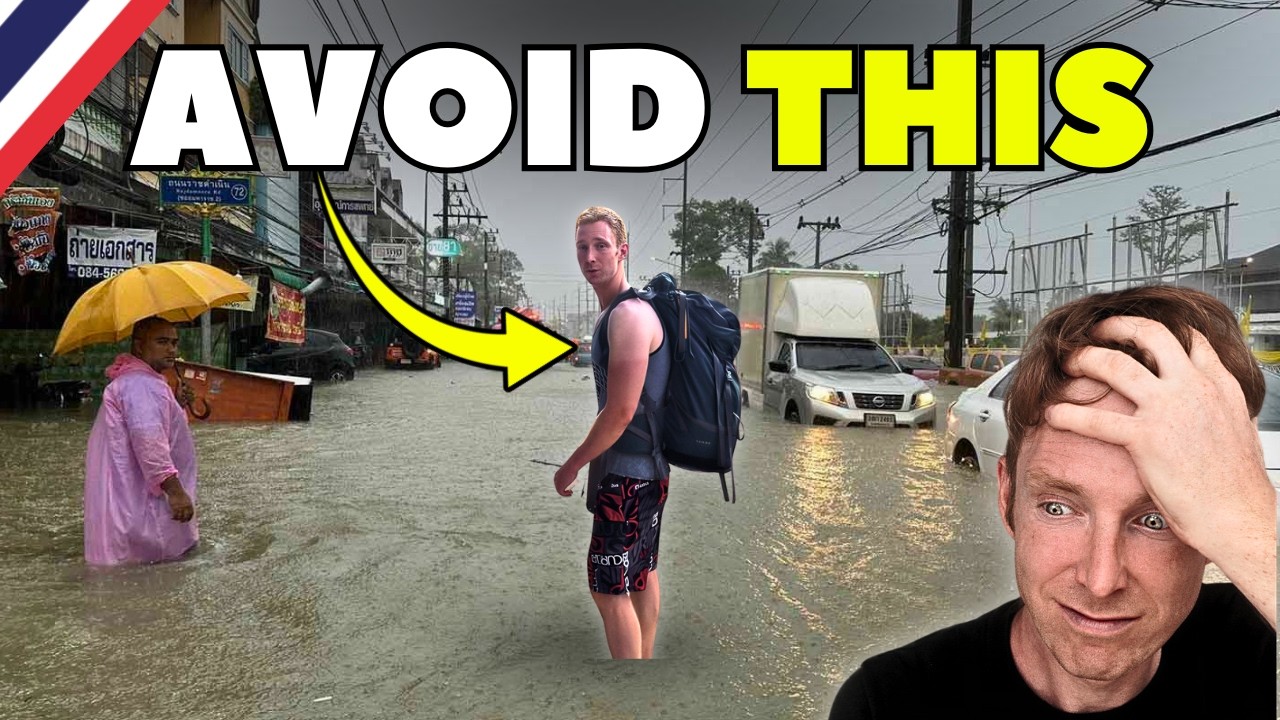
Video: Complete Guide to RAINY Season in THAILAND - Should You Visit Now?
The short version
- Thailand's official rainy season runs from about mid-May to mid-October, with August and September the wettest months.
- The Andaman coast (Phuket, Krabi) is wet from May to October; the Gulf islands (Samui, Phangan, Tao) are wet roughly October to December, so go from January. Pick the coast that is dry.
- Stay within a short walk of a BTS or MRT station in Bangkok, and book flexible rooms and tours elsewhere.
- Obey red flags and boat cancellations: rough seas and rip currents are the main danger on the beaches.
- Use repellent every day. Dengue peaks in the rainy season and bites happen in daylight.
- Leave a buffer day before any flight home, and never book a flight within a few hours of the last ferry.
Go. The rainy season is the low season: cheaper rooms and thinner crowds, provided you pick the right coast for the month and plan around afternoon downpours rather than against them. The one trip it ruins is a fixed, pre-paid island itinerary with no slack.
Who it’s for: budget-minded travellers, anyone who dislikes crowds, and city-first trips built around Bangkok. Who should skip it: anyone with a hard deadline to snorkel the Andaman reefs, hike remote trails or catch a specific ferry. Come in the dry months instead.
When the rain actually falls
The official calendar splits the year in three: hot from mid-February to mid-May, rainy from mid-May to mid-October, cool from mid-October to mid-February. The start can shift by a week or two. The Thai Meteorological Department puts the wettest stretch at August and September.
That calendar covers Bangkok, the centre, the north and the northeast. The coasts follow their own monsoons, so the coast matters more than the date:
| Region | Wet period | Notes |
|---|---|---|
| Bangkok, central Thailand, Chiang Mai and the north | Mid-May to mid-October | Wettest in August and September. |
| Andaman coast (Phuket, Krabi, Khao Lak, Koh Lanta) | May to October | Big swells on west-facing beaches; boat trips cancelled at short notice. |
| Gulf islands (Samui, Phangan, Tao) | Roughly October to December | November is usually the wettest month. Fine from June to September. |
Use the table to split a long trip. In September, take Samui and Phangan and leave Phuket for later. In November, do the reverse.
What a wet day looks like
Expect rain in bursts, not all day. A typical day in the early months is warm and bright in the morning, with a heavy shower in the late afternoon or evening that clears within a couple of hours.
It is a pattern, not a promise: a tropical storm can park over you for a day or more, and August and September are the likeliest months for it.
Do temples, markets and walking early. Keep 3pm to 7pm for malls, museums, cafés and rest.
Why it’s worth it
- Prices drop. Hotels in beach areas cut their rates in the low season. Check dates on a booking site rather than trusting a percentage.
- Fewer people. Temples and viewpoints are quieter than in the dry months.
- Greener country. The rice fields and the hills in the north are at their best.
- Cleaner air. Rain washes out the dust and fine particles that build up in the dry months.
The catch: the cheaper hotel comes with a smaller island. Many boat trips, dive operators and restaurants on the islands cut back or close for the season. Some national parks close altogether.
Getting around
Rain slows everything, so build in slack.
- In Bangkok, live on the rail. Stay within a short walk of a BTS or MRT station and use the trains as your main transport, because a downpour turns the roads into car parks. Getting around Bangkok has the lines and fares.
- Check the street on Google Street View. Some low-lying streets flood in heavy bursts, and some neighbourhoods have narrow, broken pavements that are miserable in the wet. Look at the last stretch to your hotel before you book.
- Give yourself a buffer. On the way home, sleep a night in Bangkok or Phuket before an international flight. On an island, never book a flight within a few hours of the last ferry. A storm cancels the boat and you lose the flight.
- Stay long enough. Two nights on an island can mean two days of storms and no beach. Book three or four, and keep the rest of the trip loose.
- Book late. Low-season availability is good, so wait for a clear forecast before paying for tours and rooms. Choose rooms with free cancellation where you can.
What to pack
Pack less than you think. A 7-Eleven stocks most of what you will forget, and delays are easier with a bag you can carry.
- A light rain jacket or poncho, kept in the day bag.
- A dry bag or zip-lock bags for passport, phone and cards.
- Quick-dry shirts and shorts. Leave the denim at home: it will not dry.
- Shoes that survive mud and water, such as quick-dry walking shoes and flip-flops.
- Insect repellent. See the health section below.
- A backpack, not a wheeled case, if you are heading to islands or rural areas. Wheels and mud do not mix.
More on what to bring and what to leave behind in the packing guide.
Where to spend the wet days
Bangkok is the easiest city to visit in the rains. It has the rail network, big air-conditioned malls, covered temples and museums, and plenty of cafés to wait out a storm in. The catch: heavy bursts flood some low-lying streets for an hour or two, so keep a rail route in mind.
Chiang Mai and the north are at their greenest, and the evening downpour fits a morning-trek, afternoon-café routine. The catch: hill roads can be slick or washed out, and jungle trekking carries real risks (see below).
Phuket and the Andaman are the riskiest choice. Swells are heavy, some beach clubs and boat trips shut, and swimming is often unsafe. The Phuket guide covers the beaches and how to read the flags.
The Similan and Surin islands are closed to visitors every year from mid-May to mid-October, so check the Department of National Parks for the exact dates before you plan a dive trip.
Samui, Phangan and Tao have their best beach weather from about June to September, when the rest of the country is wet. Heed the beach warning signs, and go from January if you want to avoid the Gulf’s own wet months.
Stay safe
Rain and roads
- Scooters: wet roads hide slick patches and water-filled potholes. Wear a helmet, slow down, and skip it entirely if you have not ridden before. Check that your insurance covers it.
- Walking: puddles hide gaps and broken slabs. It is easy to twist an ankle, so watch your feet, especially in older neighbourhoods.
- Heat and humidity: it stays hot and sticky between showers. Drink more water than you think you need and rest in the middle of the day.
At the beach
- Red flags mean no swimming. Rip currents are strongest in the monsoon, and tourists drown in them every year. Swim only on lifeguarded beaches and only between the flags.
- Box jellyfish are occasionally reported around Samui, Phangan and Tao, more often in the monsoon months. Heed the beach warning signs, swim in netted areas where they exist, and get medical help fast if you are stung.
- Cancelled boats are real warnings. If a national park or boat operator says no, accept it. Tropical storms are rare but dangerous, and a missed day is cheaper than a rescue.
Mosquitoes and illness
- Dengue peaks in the rainy season, and the mosquito that carries it bites in daylight. Use repellent every day, and see a doctor for a dengue test if you get a high fever with severe aches.
- Malaria is confined to specific areas: forested border regions with Myanmar, Cambodia and Laos, and the far-south provinces on the Malaysian border. Bangkok, Chiang Mai city and the main tourist islands are not among them. If your route takes you to the border areas, ask a travel clinic about preventive tablets before you go.
- Floodwater: wading through it with cuts or sores can spread leptospirosis, which peaks in the wet months. Keep wounds covered and dry, and wash after wading.
- Snakes are more likely to turn up after storms. Stay out of long grass and look at where you put your hands and feet around fallen trees. Jungle trekking is best saved for the dry months, because of mudslides and the higher disease risk.
Healthcare and insurance covers what a hospital visit costs and why cover that includes medical evacuation is worth having. Save the numbers on the emergency page.
Checking the weather
Check a forecast every morning and again before you set out on any boat. The Thai Meteorological Department publishes daily forecasts, a seven-day outlook and storm warnings in English on its website, and runs a 24-hour call centre on 1182.
Add a rain-radar app for the hour-by-hour picture. Our weather page shows live conditions and what each month is like by region.
Pick your trip
| Trip | Months | Verdict | The catch |
|---|---|---|---|
| Bangkok and the north | June or July | The easiest rainy-season trip. Go. | Some streets flood in heavy bursts, hill roads can wash out, and September and October are the wettest months. |
| Samui, Phangan and Tao | June to September | The best beach weather of the wet months. Go. | Jellyfish occasionally reported, so heed beach signs. |
| Phuket and Krabi | June to September | Go only for the prices. | Red flags and cancelled boats, so book a flexible stay and spend the days elsewhere. |
| Samui and Phangan | November | Skip, and use the Andaman instead. | The wettest month on the Gulf coast. |
Chapters
Watch next
 35 minCondo & house tours · $2,500/month · Written guideA 145 m² Soi 8 corner condo for 85,000 baht, down from 110,00028 Oct 2026
 28 minGuides · Written guideYour first hour in Bangkok: Suvarnabhumi arrival, step by step23 Oct 2026
 48 minGuides · Written guideThailand first visit: fewer stops, the free arrival card, app rides29 Jun 2026
Thailand, every Thursday.
One email a week. Free, and you can leave in one click.
- What's on in Bangkok this weekend
- Entry and visa changes, in plain English
- One guide worth reading, kept up to date