
Videos · Guides · 19 Feb 2024 · 33 min
The taxi, tout and rental tricks aimed at first-time visitors
Fast meters, 'the palace is closed' touts, rental damage claims and padded bills: how each Thailand scam works and the one-line fix.
Video: 34 worst SCAMS in THAILAND!
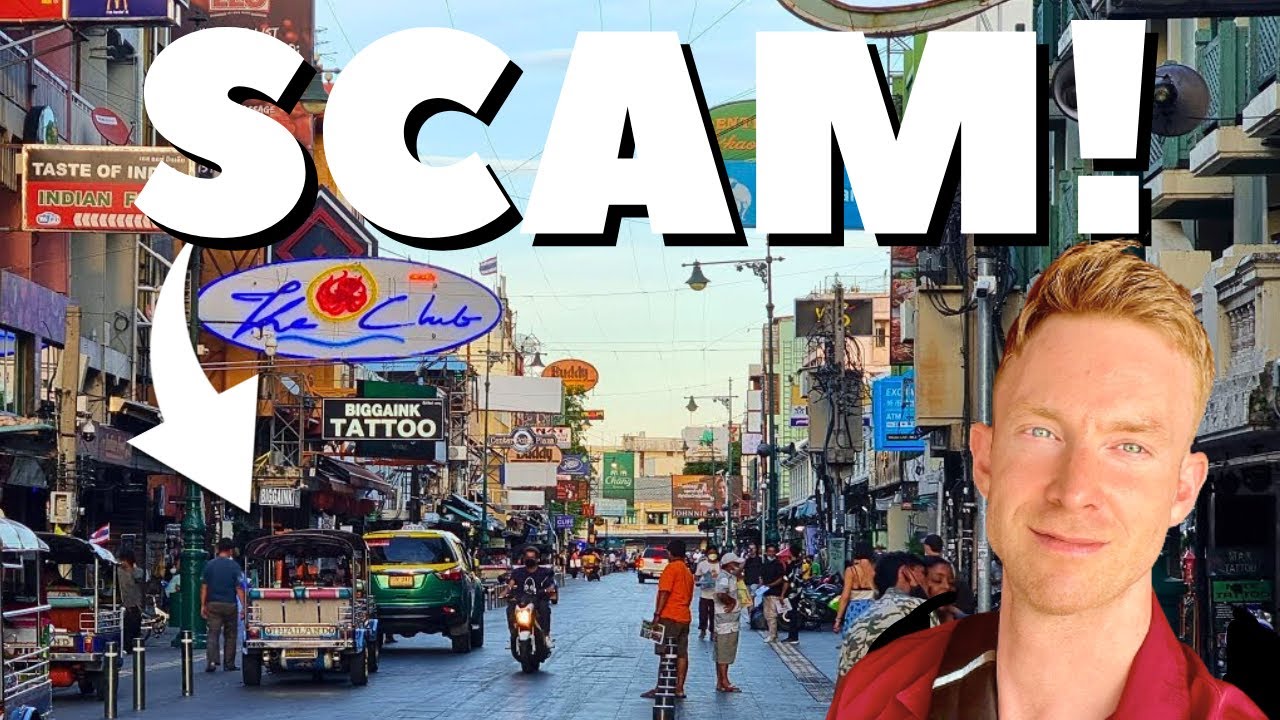
Filmed 19 Feb 2024. Rules and prices in Thailand change often: check entry rules right now and the daily news before you rely on anything here.
The short version
- Take a metered taxi from the official airport rank, not a quote from a tout at the exit.
- If a driver won't use the meter, get out and flag another. Agree the price first for tuk-tuks and motorbike taxis.
- Never follow a tout, and treat any stranger who says an attraction is closed as a scam.
- Rent bikes and jet skis from your hotel or a long-reviewed shop, photograph the bike before riding, and never leave your passport.
- Ask for the menu or the price before you order, and check the bill line by line.
- Report a serious scam to the Tourist Police on 1155.
Most Thailand scams are small, and nearly all start the same way: a stranger or a driver steers you somewhere you didn’t plan to go. Insist on the meter, agree prices before you move, and walk away from anyone who approaches you. That stops most of them.
Since filming: the TDAC arrival card arrived in May 2025, and fake TDAC websites that charge for the free form came with it. Calls from fake police and fake banks are also common; the 1441 online-fraud hotline can freeze an account you’ve sent money to. Scams in Thailand is the up-to-date, re-checked version, with every number to call.
Who it’s for: first-timers, and anyone arriving in Bangkok, Pattaya or Phuket. Who can skip it: long-term residents, though the ride-hailing and rental sections are worth a skim.
The traps below come in the order you meet them, from the airport taxi rank to the phone call after you buy a SIM.
Taxis
At the airport
At Suvarnabhumi, touts on the upper-level kerb quote several times the meter fare. The regulated taxi stand is one floor down, on level 1.
The official stand charges the meter plus a 50-baht airport surcharge, and tolls are extra, paid by the passenger. The Airport Rail Link avoids the question altogether.
The no-meter taxi
Bangkok taxis are legally required to use the meter, but the rule is often ignored. Drivers waiting at the kerb in tourist areas will almost always demand a set price, well above the metered rate.
- Flag a moving taxi rather than taking one parked outside an attraction.
- Say “meter, khrap” (women say kha) when you get in.
- If the driver refuses, get out and flag another. In popular tourist areas it can take several tries.
The fast meter, the dead meter and the scenic route
A rigged meter jumps every few seconds, sometimes at several times the normal rate, so watch the first minutes of any ride.
- Fast meter: offer what the meter showed up to that point, get out and flag another cab.
- Meter “breaks”: same response. A dead meter is an excuse to demand a much higher set fare.
- Scenic route: open Google Maps when you get in and follow the route. If the driver heads the wrong way, say so, and if he won’t correct it, ask to be let out.
Driver recommendations and the wrong pier
If a driver suggests a seafood restaurant, a gem shop, a tailor or a tour, don’t go. He is paid a commission for delivering you, and the shop recovers it from your bill.
Some drivers also drop tourists at the wrong pier for a popular floating market, where the boat ride in costs far more. Keep Google Maps open and check the destination matches.
The wrong-change scam
Never get into a taxi without small notes. You hand over a 1,000-baht note, ask for change, and the driver comes back with the wrong amount.
A more creative version: the friendly driver offers ten 100-baht notes for your 1,000, counts them out, then palms the note you gave him and claims it was a 100. Ignore any odd request from a taxi driver. It is usually a scam, or the set-up for one.
Tuk-tuks and motorbike taxis
Neither has a meter, and overcharging is common. Agree the price before you get on. Without one, the driver will demand as much as he can at the other end.
Ride-hailing apps
Grab and Bolt are the easiest way to see what a trip should cost. Download both and compare before you ride.
Three app-specific traps:
- The car swap. A driver asks you to change cars partway through a long trip. Refuse if you can: you’re no longer in the car registered on the app.
- The extra-fee request. The driver messages asking for more money to collect you, or asks for more on arrival. Show the app’s price on your screen and pay that.
- The early meter. On Grab Taxi the meter should start only once you’re in the car. If it already shows a charge, ask the driver to reset it.
Last-minute cancellations and requests to cancel happen, especially in Phuket and Pattaya. Expect a cancellation or two before a driver actually comes.
Buses, trains and rentals
Station touts. At a bus or train station, someone asks where you’re going and says the service is full. Some claim to work for the Tourism Authority of Thailand, which is a government agency, not a tour operator. Walk up to the ticket window and buy a ticket on the spot; the private vans they sell wait to fill up before leaving.
Motorbike and jet ski rentals. The scam is a damage claim for marks that were already there. Protect yourself in this order:
- Rent through your hotel. A hotel risks its name if its rental desk runs a scam.
- Check Google reviews. Big shops with a long history and plenty of reviews rarely scam.
- Photograph and film the bike or jet ski before you ride. The worst operators cover damage with temporary paint, so steps one and two matter more.
- For jet skis, watch the returns. Spend a while on the beach and see how the shop treats customers coming in.
- Never leave your passport. A shop holding it can demand a much larger sum to hand it back.
Street scams in tourist areas
These cluster around Khao San Road, the old city around the Grand Palace, and the busy stretch of Sukhumvit around Asok.
The friendly stranger. Someone starts a conversation, asks where you’re from and builds rapport before the ask. A common opener near MRT exits: what colour is Thai money, then a request to see yours. Keep your wallet in your pocket and walk on.
- The fortune teller. “You’re very lucky, do you want to know why?” Then a half-baked reading and a request for payment.
- “The palace is closed today.” He tells you the Grand Palace or another sight is shut for a holiday and offers a personal tour. It is almost never closed. Ask at the gate, not the person who stopped you.
- The free gift. A bracelet tied on your wrist, or birdseed pressed into your hand to feed the pigeons. Both end with a demand for money.
In tourist areas, nothing offered on the street is free.
Suit and watch sellers. The watches are often fake and the prices high. Bangkok has good tailors, but the ones who send touts onto the street are the ones to avoid, and cheaper cloth than you paid for is a common trick. Check Google reviews first.
The discount tout. A man offers a cheaper price at “his” massage shop. He usually doesn’t work there and pockets the money. Never follow a tout anywhere.
Menus and prices. In tourist areas, ask to see the menu or the price before you order, just as you’d agree a tuk-tuk fare.
Pickpockets. Keep your phone off tables, wear deep or zipped pockets, and carry bags in front of you. If your wallet goes, cancel your cards at once.
Money requests and investment pitches
Other foreigners also ask for money, usually for a ticket home or a lost wallet. Giving is your call, but the story is a well-worn one.
Among expats, treat an investment pitch or a request for money soon after meeting someone as a sign to find new friends.
Accommodation and tours
Photos that don’t match. Listings often use old wide-angle photos, so a room that looks clean, spacious and new can turn out dirty, small and old. Google reviews tend to be more candid than those on Agoda or Booking.com; read them before every booking.
Bait and switch. A host says your apartment is suddenly unavailable and offers a smaller one. Cancel through the platform and claim your refund rather than accept the swap.
Tours. Ask exactly what’s included before you pay, and check the company’s Google reviews. Some cheap island or safari tours add an entrance fee on arrival or leave you waiting for the van back. Others are simply overpriced when local buses and trains are this cheap.
Padded bills
A common one in busy restaurants: an extra beer on every diner’s tab. Check the total line by line before you pay; a polite query is usually enough to get a corrected bill. Keep small notes handy, since wrong change turns up here too.
Phone, SIM and online scams
After you register a SIM, you may get a call or text saying a parcel is waiting and you must pay a fee, or that you’re under investigation for fraud. Assume it’s a scam.
Don’t pay, and don’t give out personal details, however official the caller sounds. If you’ve already sent money or shared bank details, call your bank at once, then the 1441 online-fraud hotline.
If you get scammed
Don’t escalate. Arguments with a driver or a shop owner can turn ugly, and the amount at stake is usually small. Take it as a lesson and move on.
For a serious scam, or if you want a formal report, call the Tourist Police on 1155, 24 hours, in English. The full, current list, from fake arrival cards to fake title deeds, is in scams in Thailand.
Chapters
- 0:00Why Thailand has so many scams
- 1:00Airport taxis
- 2:17Meter scams
- 5:00Driver recommendations and wrong piers
- 6:11The wrong-change scam
- 8:20Tuk-tuks and motorbike taxis
- 9:28Grab and Bolt
- 14:13Train and bus station touts
- 15:16Motorbike and jet ski rentals
- 17:07Friendly strangers and street scams
- 21:57Touts, menus and pickpockets
- 25:20Investment pitches
- 25:35Hotels, Airbnb and tours
- 28:00Padded bills
- 31:09Phone and SIM scams
- 31:49If you get scammed
Watch next
 28 minGuides · Written guideYour first hour in Bangkok: Suvarnabhumi arrival, step by step23 Oct 2026
 48 minGuides · Written guideThailand first visit: fewer stops, the free arrival card, app rides29 Jun 2026
 16 minGuides · Written guideVisit Chiang Mai from November to January and stay in the old city11 Feb 2026
Thailand, every Thursday.
One email a week. Free, and you can leave in one click.
- What's on in Bangkok this weekend
- Entry and visa changes, in plain English
- One guide worth reading, kept up to date