
Videos · Guides · 17 May 2025 · 21 min
Thailand scams: fake arrival cards, rental bikes, forged deeds
Fake arrival-card sites, rental-bike traps, phone theft, fake jobs and rentals, forged title deeds: what each looks like, what to do, who to call.
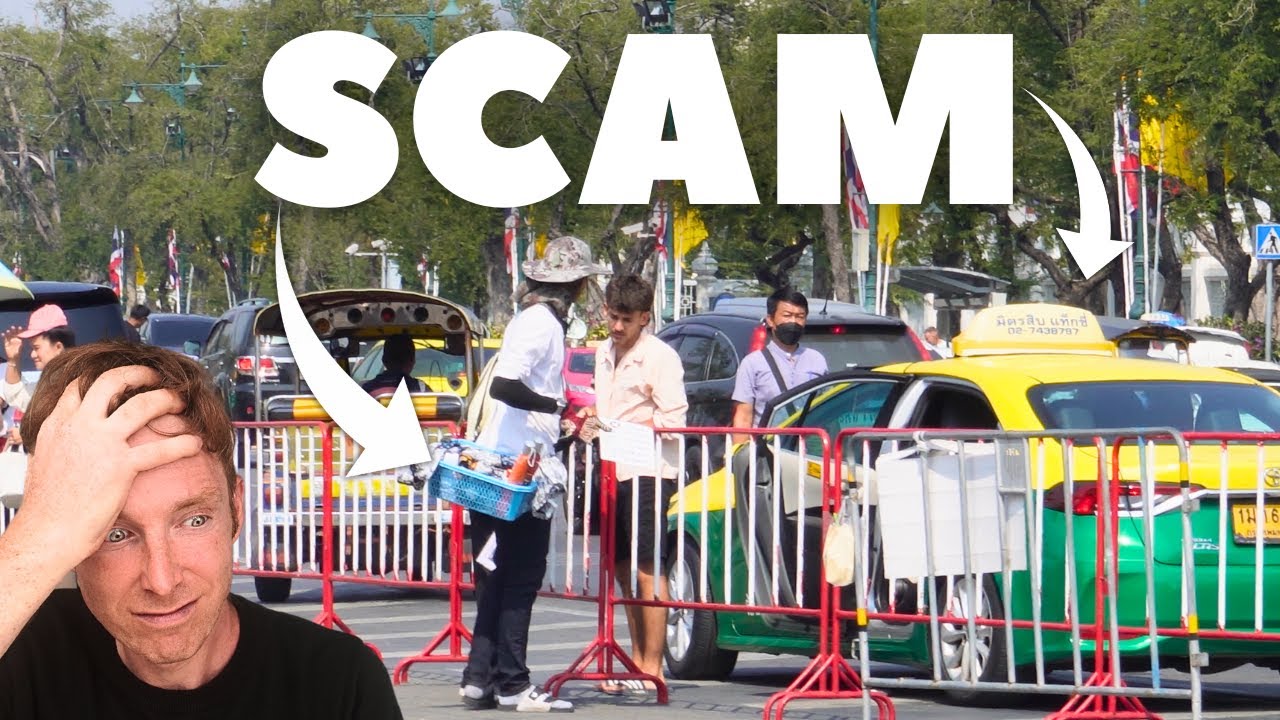
Video: 31 New SCAMS in Thailand (2026)
Rules may have changed since this was filmed. Current rules: Entry rules right now
The short version
- The Thailand Digital Arrival Card is free and lives only at tdac.immigration.go.th. Any site that asks for payment is a copy.
- Rent motorbikes only from large, long-established shops, and photograph the bike before you ride. Never leave your passport as a deposit.
- Choose the restaurant or shop yourself whenever you meet someone new. Most street invitations end in an inflated bill.
- Police, customs and banks do not ask you to move money. Hang up and call the organisation on a number you look up yourself.
- Never pay a deposit for a home or an item you have not seen in person, and never pay to apply for work.
- Money lost online or by transfer: call your bank, then 1441. Tourist Police 1155 for everything else.
Most Thailand scams are old tricks with new packaging. Many reach you before you land, at the tourist sights or after you settle. The rule that beats nearly all of them: never pay, transfer or hand over anything to someone who approached you.
Who it’s for: first-time visitors, anyone planning a longer stay, and anyone about to rent or buy. What it leaves out: the classic tuk-tuk, taxi and “it’s closed today” tricks, which are in scams in Thailand.
If it happens to you
Save these before you need them.
| Problem | Call or use | Notes |
|---|---|---|
| Cheated, overcharged or threatened in person | Tourist Police 1155 | Staffed 24 hours, English among several languages |
| Money lost by transfer, card or online | Your bank first, then 1441 | 1441 is the government’s Anti-Online Scam Operation Center; it asks banks to freeze receiving accounts. Most Thai banks run 24-hour fraud hotlines; use the number on your card |
| Written complaint about an online crime | thaipoliceonline.go.th | The Royal Thai Police portal |
| Immediate danger | 191 | Police |
| Lost passport, or need a consular contact | Your embassy | The Tourist Police can help with the police report |
Speed matters. Report within hours, and keep a reference number from every call.
The catch: anyone who contacts you offering to recover your money for a fee is running a second scam.
Before you fly
Fake arrival-card websites
What it looks like: a search result or ad for the “Thailand arrival card” that asks for a fee and your passport details. The real card charges nothing, so you lose the fee and put your personal data in unknown hands.
What to do: the Thailand Digital Arrival Card is free. Use only tdac.immigration.go.th, and file it in the three days before you land. The step-by-step guide covers each field. If you paid a copy, tell your card issuer, then file the real one. Report suspect sites on thaipoliceonline.go.th.
The catch: copies often rank above the real site in search results, so type the address yourself.
Theft on the plane
What it looks like: organised thieves on short international flights search overhead lockers and seat pockets for cash, cards and jewellery once passengers are asleep or the cabin is dark.
What to do: keep wallet, phone, cards and passport on your body or in the bag under the seat in front of you. Tell cabin crew if you see someone going through the lockers.
The catch: cards are the quiet loss. Police have warned passengers against leaving cards in overhead bins, and a thief can use a card before you notice it is gone.
Getting around
The songthaew “charter”
A songthaew is a pick-up truck with benches that runs a fixed route, and the main-route fare is low and the same for everyone. Ask a hotel or another passenger what it is before you board.
What it looks like: you lean in at the driver’s window to ask whether he goes to your hotel. Some drivers then treat that as a private hire and quote several times the usual fare, even when your stop is on his route.
What to do: don’t negotiate at the window. Climb in, follow your route on a map, press the bell near your stop and pay at the driver’s window when you get down.
The catch: the saving only works if you stay out of the private-hire conversation, so decide before you lean in.
Motorbike rental: fake theft and fake accidents
The old version is a shop that blames you for damage that was already there. Two other versions go further.
- The fake theft. Staff follow you to your hotel and take the bike with a spare key, then bill you for it. You are billed for a bike you never lost.
- The fake accident. Some renters report being told afterwards that they caused an accident or damage they do not remember. The message may come from the shop or from a caller claiming to be from a police station, with a demand for compensation.
What to do:
- Rent from a large, established shop with many recent reviews, or through your hotel.
- Photograph every scratch before you leave, with the shop in shot.
- Never leave your passport as a deposit. Offer a photocopy or cash instead.
- Park somewhere you can see the bike, and lock it with your own lock.
- If you get a call about an accident, don’t pay anyone on the spot. Ask for the case number and call 1155.
The catch: a reputable shop costs a little more per day. Also check you are licensed: riding without the right licence usually voids travel insurance, so a crash costs you twice.
Shopping and tours
Fakes, swapped parts and factory “art”
What it looks like: fake clothing is sold openly in tourist markets and is priced to match. The costlier risks are electronics and art.
- Used phones and laptops with cheaper parts swapped inside, sold as genuine used goods.
- Repair shops that fit cheaper parts in place of yours.
- “Original” paintings that are factory-made and sold as the artist’s own.
What to do: buy electronics from brand stores or large retailers, where prices for branded goods are broadly the same. Use large repair shops with plenty of Google reviews. Treat “I am the artist” claims from street sellers with caution, and research before paying for anything sold as collectible. In markets, walk a full circuit and compare prices before you buy.
The catch: big stores charge more than a stall. That gap is the price of getting what you paid for.
Tours sold by drivers
What it looks like: drivers parked outside sights with signs, or a taxi driver who produces tour tickets as soon as you sit down. The driver takes a large cut, and many such tours run short or skip what was promised.
What to do: buy the ticket from the attraction, or book through a platform that shows recent reviews for each tour, and read the bad ones first.
The van-stop pitch
What it looks like: a minivan or bus stops halfway. Passengers are led into a room, asked for their hotel name for the drop-off, then pitched tours by staff who resell them.
What to do: give the hotel name, say no thank you and walk back to the vehicle.
On the street
Fake money changers
What it looks like: near exchange booths, a stranger says he needs to change money before leaving the country, or has no passport for the booth, and offers a rate better than the board. The notes may be counterfeit, or the deal may be a switch.
What to do: change money only at licensed booths and banks, with your passport.
Strangers who ask to see your money
What it looks like: a stranger on the street or in a shop starts with a comment on your appearance, offers a cheap treatment or tour and leads you to a shop. Another version asks to see banknotes from your home country, then uses sleight of hand to take some, or swaps them for worthless notes.
What to do: never take out your wallet or show cash to a stranger. If anyone approaches you in a tourist area to build rapport, smile, say no thank you and keep walking.
The catch: being polite and being trapped feel similar. You are allowed to walk away without finishing a sentence.
Stolen phones and the “found it” messages
Thieves target smartphones, iPhones above all, because they resell well.
What it looks like: after a theft, you mark the phone lost and begin to receive texts that seem to come from Apple or Google, with a link to “locate” it. They are phishing pages built to get your Apple Account details and unlock the phone. Other messages come from the thief, asking for money in return for the phone.
What to do: Apple says to ignore unexpected messages claiming a lost device has been found. Ignore the links, go to iCloud.com/find or the Find My app yourself, and follow Apple’s steps for a stolen device. Change your Apple Account password, cancel cards, report the theft to the police and never pay for its return.
The catch: a police report matters for insurance, but it rarely brings the phone back.
The invitation that ends in a bill
What it looks like: a friendly stranger asks where you’re from, mentions a daughter about to study in your country and asks for a coffee and some advice. A second person joins and you’re invited to their home or a nearby restaurant. If you leave, they grow upset.
What it costs: a very large bill for a poor meal, shared between the venue and the people who brought you. More rarely, a drink laced with a sedative, followed by robbery or assault.
The rule is simple. If you meet anyone new, choose the restaurant or shop yourself, in a place you picked on your own. Never go to a private home, and never leave a drink unattended.
The catch: you will turn down some genuinely kind people. That is cheaper than the alternative.
Staying longer
Fake job offers and scam compounds
What it looks like: a social media advert or forum post for a job in Thailand or a neighbouring country with a high salary, light requirements and a fast hiring process.
- The common version. The “employer” asks for fees to process an application, visa or work permit, then asks for more until you stop paying.
- The dangerous version. Several governments in the region have warned that some of these offers are recruitment into scam-call centres across the border, where workers are held against their will.
What to do:
- Never pay to apply for a job.
- Verify the employer through its own official channels, and through your embassy if the job is abroad.
- In Thailand, the employer applies to the Department of Employment for a work permit, and a Non-Immigrant B holder should have the work permit within 90 days of entering, according to the Foreign Ministry. You do not buy one from a stranger.
- Be wary of any offer that has you travel to a border area, or enter as a tourist and “sort the paperwork later”.
The catch: real jobs also sound good. The test is who asks for money, and when.
Scam calls and texts
What it looks like: after you register a Thai SIM, calls and messages arrive. They claim to be your bank, the police, customs or a courier with a held parcel, or they warn that your account is linked to a crime. Some use AI-generated voices or faces to imitate officers. Many are run from compounds in neighbouring countries.
What it costs: whatever you transfer to the “safe” or “checking” account, which is often everything in it.
What to do: don’t answer unknown numbers, and don’t open attachments. Genuine officers and banks do not ask you to move money to another account. Hang up, look up the organisation’s number yourself and call it. Report the number to 1441.
Online friendship and investment scams
What it looks like: a friendly contact on an app or social media talks to you for weeks, then mentions a business idea, an investment platform or an emergency medical bill.
What to do: don’t send money or crypto to anyone you haven’t met in person, however long you have talked. A real friend will not mind that you said no.
The over-friendly newcomer
What it looks like: a fellow foreigner who befriends you at speed, then borrows money, pushes an investment or a business, or takes something valuable. Meetup groups are a favourite place for them to find newcomers.
What to do: go slowly. Don’t lend money, invest or sign anything with someone you have known for days. Check what they say about themselves.
The catch: most long-term residents are decent people who want to help. The warning sign is speed and money, not friendliness.
Visa and relocation agencies
What it looks like: once you search for visa or licence help, ads follow you around. Some agencies supply forged visas or documents.
What to do: check Google reviews and forums for the specific agency, and compare what it promises with the rules on the immigration site. A forged visa leaves you, not the agent, explaining it to an officer. Our visa guide shows each route and its checks.
Condo rental listings
What it looks like: a bargain condo on a social platform or rental site. The landlord or agent asks you to transfer a deposit, the first month or the whole lease to hold it. Then the post vanishes, or you arrive to keys for a worse unit.
What to do: don’t book a home or send any money while you’re outside Thailand. Rentals are easy to find in person. Stay somewhere short-term for a week, view in person, read the written contract, and pay only after you have signed it and seen the unit. Bangkok rents from real tours shows what fair rents look like.
The catch: you will pay more for a week or two of hotel. That is the cost of safe viewing.
Marketplace sellers “abroad”
What it looks like: a listing in a Thailand group where the seller says they are out of the country and asks for a transfer to reserve the item. After the first payment, another follows, then silence.
What to do: pay only when you can see and hold the item.
Buying property
Forged and doubly sold title deeds
What it looks like: a forged title deed for land or a condo, or the same deed sold to several buyers.
What it costs: potentially the whole purchase price.
What to do:
- Ask the Land Office for the province to confirm who the registered owner is and whether any encumbrance is recorded. Don’t rely on a copy supplied by the seller.
- Use an independent lawyer, not one recommended by the seller or agent.
- For a condo, get written confirmation from the building’s juristic person that foreign ownership stays within the 49% limit. The Land Office rejects a transfer that would exceed it.
- Send the money from abroad in foreign currency, and keep the bank’s foreign exchange transaction certificate. The Land Office asks for evidence of the funds.
- Pay through the bank transfer process the Land Office requires, not in cash to the seller or agent, and complete the transfer at the Land Office.
The catch: a lawyer adds a fee and a few days. Both are small beside the price of a home. Also remember that foreigners cannot own land in their own name, so a deal that promises otherwise is suspect on its face.
If you’re caught out
Stay calm. A raised voice in Thailand tends to make things worse. For a small sum, pay what’s fair, leave and treat it as a lesson. The rest of the common tricks are in scams in Thailand, and the emergency page prints the numbers on one sheet.
Chapters
- 0:00Introduction
- 0:42Luggage theft on the flight
- 1:31Fake arrival-card sites
- 2:36The songthaew charter trick
- 4:04Motorbike rental scams
- 5:43Fakes, swapped parts and factory art
- 7:50Overpriced tours
- 8:52Van and bus stops
- 9:26Street money exchange
- 10:10Friendly strangers
- 11:38Stolen phones
- 12:29The invitation that costs more than a bill
- 14:31Trafficking and scam compounds
- 15:18Fake job offers
- 16:05Calls and texts
- 16:45Online friendship and investment scams
- 17:18The over-friendly newcomer
- 18:02Visa and relocation agencies
- 18:55Condo rental listings
- 19:46Online marketplace sellers
- 20:20Buying property
Watch next
 35 minCondo & house tours · $2,500/month · Written guideA 145 m² Soi 8 corner condo for 85,000 baht, down from 110,00028 Oct 2026
 28 minGuides · Written guideYour first hour in Bangkok: Suvarnabhumi arrival, step by step23 Oct 2026
 33 minCondo & house tours · $750/month · Written guideA $750 condo in Phrom Phong, and the two-year lease that got it19 Oct 2026
Thailand, every Thursday.
One email a week. Free, and you can leave in one click.
- What's on in Bangkok this weekend
- Entry and visa changes, in plain English
- One guide worth reading, kept up to date