
Guides · Arrive · Thailand
Thailand visas: which one fits your stay
Thirty days visa-free, a 60-day tourist visa, the DTV, retirement visas, the LTR or Privilege: what each costs and who it suits after September 2026.
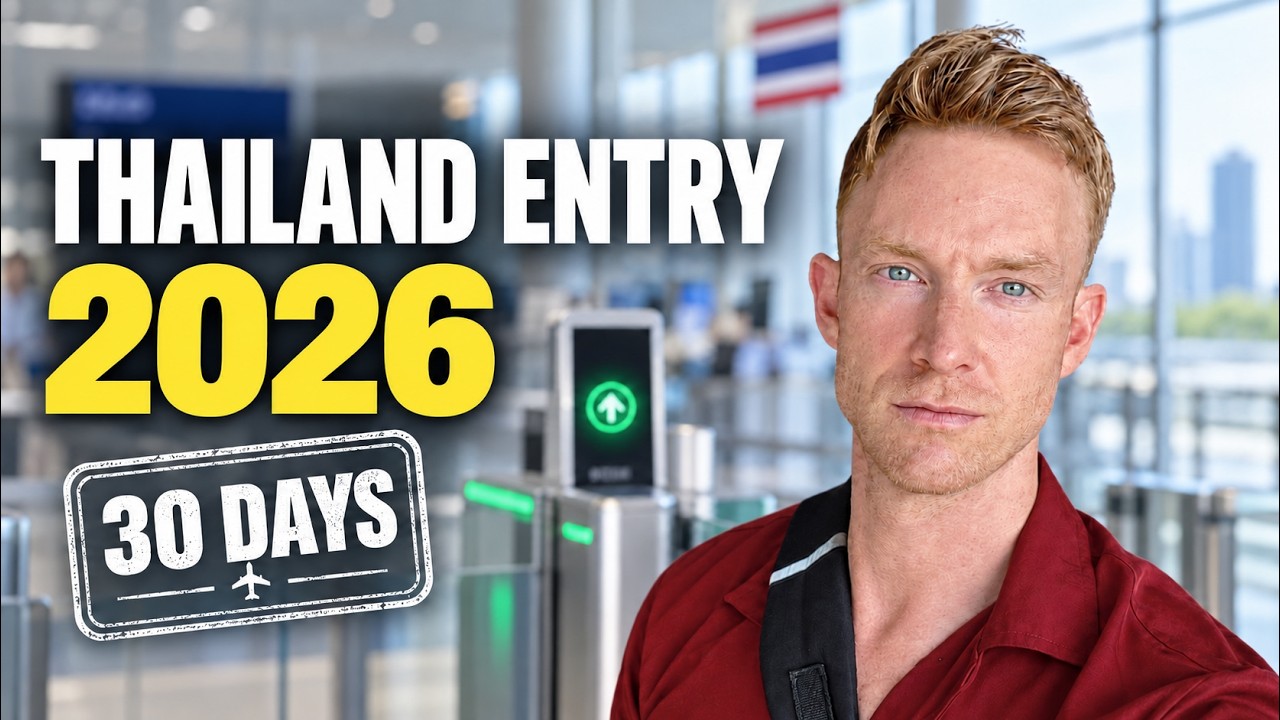
Earlier versions: Visa & Entry Rules for Thailand in 2026: What Visitors and Expats Need to Know, Arriving in Thailand: 15 Worst Immigration and Visa Mistakes, Thailand Privilege Card Bronze or Destination Thailand Visa
Key things to know
- Since 15 September 2026, visitors from 60 countries and territories, including the US, UK, Canada, Australia and the EU, get 30 days visa-free, for tourism only.
- You can extend a visa-free stay once, by up to 30 days, at an immigration office for 1,900 baht.
- Staying longer than 30 days? A tourist visa from the official e-Visa site gives 60 days, extendable by 30.
- Visa-free entries by land are capped at two per calendar year for most nationalities. Flying in doesn't count towards the cap.
- Visa on arrival now covers only Azerbaijan, Belarus and Serbia.
- Carry an onward ticket, your first-night address and 20,000 baht or the equivalent per person, and complete the free TDAC arrival card.
- For a long stay, the DTV (500,000 baht in savings) and the retirement visas (800,000 baht or 65,000 a month) are the usual routes; the LTR and Privilege card cost more and ask less of you each year.
For a holiday of up to a month, you need no visa at all: 30 days visa-free if you hold one of 60 passports, plus a free arrival card. For anything longer, book a 60-day tourist visa before you fly, and if you plan to stay most of the year, choose a long-stay visa built for it rather than stringing short stays together. That last habit is what gets people turned away at the border.
Who this is for: anyone planning a trip or a move who wants to know which visa matches the stay they have in mind.
Who can skip it: holders of a work permit through a Thai employer. Your employer’s HR team or visa agent handles the Non-B process, which isn’t covered here.
What changed on 15 September 2026
Thailand rewrote its short-stay rules in new Interior Ministry orders published in the Royal Gazette on 31 August 2026. They took effect on 15 September.
- Visa-free stays dropped from 60 days to 30 for passports from 60 countries and territories, among them the US, UK, Canada, Australia, New Zealand, Japan, India and every EU member state. Mauritius and Seychelles get 15 days.
- The exemption is now for tourism only. Coming to work, do business or study needs the visa for that purpose.
- Land-border entries are capped. Most visa-exempt travellers can enter through a land checkpoint no more than twice per calendar year. Malaysian, Bruneian, Indonesian and Singaporean citizens are exempt.
- Visa on arrival shrank from 31 countries to three: Azerbaijan, Belarus and Serbia, for 15 days at 2,000 baht.
- 21 nationalities lost visa-free entry and now apply in advance on the e-Visa site, among them Mexico, Colombia, Sri Lanka and Morocco.
- Bilateral agreements are unchanged. South Koreans, Brazilians, Argentines, Chileans and Peruvians still get 90 days; Chinese, Russian and Vietnamese citizens 30.
If you entered before 15 September, the date on your entry stamp still stands.
What hasn’t changed: the long-stay visas (DTV, retirement, LTR, Privilege) work as before, and so does the TDAC arrival card.
The options at a glance
Fees are Thai government fees as of October 2026. Embassies charge the equivalent in local currency, so the figure on your receipt will differ slightly.
| Option | Stay | Cost | Money you must show | Suits |
|---|---|---|---|---|
| Visa exemption | 30 days, +30 once at immigration | Free; extension 1,900 baht | 10,000–20,000 baht per person, on request | Holidays up to two months |
| Tourist visa (TR) | 60 days, +30 once | 1,000 baht (US$40 in the US) | Bank statements; each embassy sets its own figure | Trips of two to three months |
| Destination Thailand Visa (DTV) | 180 days per entry for five years, +180 once per entry | 10,000 baht | 500,000 baht in savings | Remote workers, Muay Thai or cooking students, long-stay medical patients |
| Non-O (retirement) | 90 days, then one-year extensions | 2,000 baht; each extension 1,900 | 800,000 baht in a Thai bank or 65,000 a month | Retirees aged 50+ |
| Non-O-A (retirement) | One year, multiple entry | 5,000 baht, charged in local currency | 800,000 baht or 65,000 a month, plus 3 million baht of health cover | Retirees aged 50+ who want to arrive ready |
| Long-Term Resident (LTR) | 10 years (5 + 5) | 50,000 baht | US$80,000 a year in passive income, among four routes | Well-off retirees, remote workers for large firms, investors |
| Thailand Privilege | 5 to 20 years, by tier | 650,000 to 5 million baht | None | Anyone who wants the paperwork done for them and can pay up front |
Visa exemption: the default for a holiday
The verdict: for a trip of under a month, this is all you need.
You land, an officer admits you for 30 days, and that’s it. Need longer? Go to an immigration office before your 30 days run out with form TM.7, a photo, your passport and 1,900 baht. Extensions are at the officer’s discretion and you get one per entry.
The catch: the exemption is a tourist privilege, not a right, and officers read your travel history. Back-to-back visa-free stays with short trips out in between look like living here on tourist entries. There’s no published limit, but anything approaching 150 days in a rolling year on exemptions and tourist visas tends to draw questions, and sometimes a refusal.
Watch out for: e-gates. At Suvarnabhumi, the arrival gates are open to passports from 33 countries and territories, but only for visa-exempt entry, with a TDAC and a previous Thai entry stamp in your current passport. Walk through one holding a visa and you can be logged as visa-exempt instead. US passports use the staffed booths for now.
Tourist visa: when 30 days isn’t enough
The verdict: for two or three months in Thailand, apply for a single-entry tourist visa on the official e-Visa site, thaievisa.go.th, before you fly.
It gives 60 days from the date you enter, and you can extend once by 30 days at an immigration office for 1,900 baht, for 90 days in all. You must enter within three months of the visa being issued.
The catch: each embassy sets its own evidence rules. The Washington embassy asks for bank statements showing US$700 per person per month of your stay; the Kuala Lumpur embassy asks for 30,000 baht per person. Read the page for the embassy that covers where you live, and apply at least two weeks ahead.
Skip it if you hold one of the 60 visa-exempt passports and your trip is under 30 days. You’d be paying for paperwork you don’t need.
Destination Thailand Visa (DTV): the long stay for remote workers
The verdict: the most flexible long-stay visa Thailand has, if you can show 500,000 baht and a genuine reason.
The DTV costs 10,000 baht and lasts five years, with multiple entries. Each entry gives 180 days, and you can extend once per entry by 180 days for 1,900 baht. You qualify as a remote worker or freelancer with clients outside Thailand, or for a “soft power” activity such as Muay Thai training, a Thai cooking course or medical treatment. Applicants must be 20 or older, and a spouse and children under 20 can apply as dependants.
What changed on 31 August 2026: you now apply through the embassy covering your country of nationality or permanent residence, with proof of that residence and a police clearance certificate. The days of applying from a weekend in Vientiane are over.
The catch: it isn’t a work permit. You can’t work for a Thai company or Thai clients. Embassies want to see the 500,000 baht sitting in your account for months, not deposited the week before. DTV holders who arrive with thin paperwork have been questioned at the airport; carry your evidence of purpose when you fly in.
Skip it if your income comes from a Thai employer, or your savings are below 500,000 baht.
Retirement visas: Non-O and O-A
The verdict: the standard route for anyone 50 or over. Choose the Non-O if you’re happy to finish the process in Thailand; choose the O-A if you want to arrive with a full year already granted.
Both ask for the same money: 800,000 baht in the bank, an income of 65,000 baht a month, or a mix of the two adding up to 800,000 a year. The O-A also needs 3 million baht (US$100,000) of health cover, a police certificate and a medical certificate, and you apply from your home country.
The Non-O has no health insurance rule. You arrive on 90 days, then apply for a one-year extension at your local immigration office, every year.
The catch: the annual extension rules are stricter than the visa itself. The 800,000 baht has to sit in a Thai bank, and your balance can never drop below 400,000. The retirement guide walks through the timetable, the insurance and what it really costs.
Skip it if you’re under 50, or you can’t leave 800,000 baht untouched.
Long-Term Resident visa (LTR): ten years, fewer chores
The verdict: the best visa Thailand offers, for the few who qualify.
The LTR is run by the Board of Investment and costs 50,000 baht for ten years, granted as five plus five. You report your address once a year instead of every 90 days, and you never need a re-entry permit. There are four routes:
- Wealthy pensioners: 50 or over, with US$80,000 a year in passive income such as a pension, dividends or rent. With US$40,000 to US$80,000, you also need US$250,000 invested in Thailand.
- Work-from-Thailand professionals: US$80,000 a year from an employer abroad that’s listed or has US$50 million in revenue over three years.
- Wealthy global citizens: US$1 million in assets, with US$500,000 invested in Thailand.
- Highly skilled professionals in industries the BOI targets.
Everyone also needs US$50,000 of health insurance, Thai social security, or US$100,000 held in the bank for 12 months.
The catch: salary doesn’t count for the pensioner route, and the evidence is exacting: tax returns, a year of bank statements, certified translations. Most retirees don’t meet the income bar.
Thailand Privilege: paying for convenience
The verdict: a membership, not a visa you qualify for. Worth it if you value your time over 650,000 baht.
| Tier | Fee | Membership |
|---|---|---|
| Bronze | 650,000 baht | 5 years |
| Gold | 900,000 baht | 5 years |
| Platinum | 1.5 million baht | 10 years |
| Diamond | 2.5 million baht | 15 years |
| Reserve | 5 million baht | 20 years |
There’s no age limit, no money to park in a bank and no insurance requirement. A liaison files your 90-day reports and you get a fast track at the airport.
The catch: the whole fee is paid up front, in one go. It also doesn’t allow work. Five years of Bronze works out to about 130,000 baht a year, but compare it with the DTV first: for 10,000 baht, a remote worker gets most of the same freedom.
What to carry at the border
Officers rarely ask for all of this. Have it anyway; when they do ask, you’ll need it on your phone or on paper within a minute.
- Your passport, with at least six months’ validity and undamaged pages.
- Your TDAC confirmation, completed free at tdac.immigration.go.th in the three days before you land. Our TDAC guide goes through every field.
- An onward or return ticket dated within your permitted stay.
- Your first-night address, with a booking confirmation.
- Money for your stay: official guidance for visa-free arrivals quotes both 10,000 and 20,000 baht per person, so carry 20,000 (40,000 per family) in cash, a card or a statement. Enforcement varies and checks are rare on a first visit. Children under 12 are exempt.
- Your visa approval, if you have one: print the e-Visa PDF as well as saving it.
- Cash over the limit gets declared. Declare Thai baht over 450,000, and declare foreign currency over US$15,000 or its equivalent.
Good to know: neither the proposed 1,000-baht departure tax nor a tourist entry fee is being charged. The departure tax is on hold, and the entry fee, now proposed at 450 baht, hasn’t been approved.
When things go wrong
- You overstayed: the fine is 500 baht a day, up to 20,000 baht. Overstay more than 90 days and you face a ban on returning. Leave or extend before the date on your stamp.
- You were refused entry: you’ll be put on the next flight out at your own cost. Before trying again, get a visa that matches what you’re doing here.
- The rules change again: this guide is re-checked whenever Thailand announces a change. The rule cards below show what changed and when.
Rules this guide relies on
Stable Declaring cash at customs changed 23 Feb 2017
Changed recently Departure tax and tourist entry fee: neither in force changed 22 Oct 2026
Changed recently Suvarnabhumi e-gates: 33 nationalities changed 22 Sept 2026
Changed recently Visa-free entry by land: twice a calendar year changed 15 Sept 2026
Unclear or enforcement varies Proof of funds and an onward ticket changed 8 May 2000
Stable TDAC: the digital arrival card changed 1 May 2025
Changed recently Visa-free stay: 30 days, tourism only changed 15 Sept 2026
Changed recently Visa on arrival: three countries only changed 15 Sept 2026
Thailand, every Thursday.
One email a week. Free, and you can leave in one click.
- What's on in Bangkok this weekend
- Entry and visa changes, in plain English
- One guide worth reading, kept up to date
Related guides
What's changed
| Date | Change |
|---|---|
| 25 Oct 2026 | First published |
Guidance, not legal, tax or immigration advice. Rules in Thailand can change with little notice; confirm with the official source before you travel.