
Videos · Guides · 24 Jan 2025 · 16 min
Renting for one to three months in Thailand: apartments beat condos
The 30-day hotel-licence line, the TM30 form, lease and utility checks, and the deposit and takeover scams.
Video: How to Find Short-Term Rentals in Thailand for 1 to 3 months? Everything You Need To Know
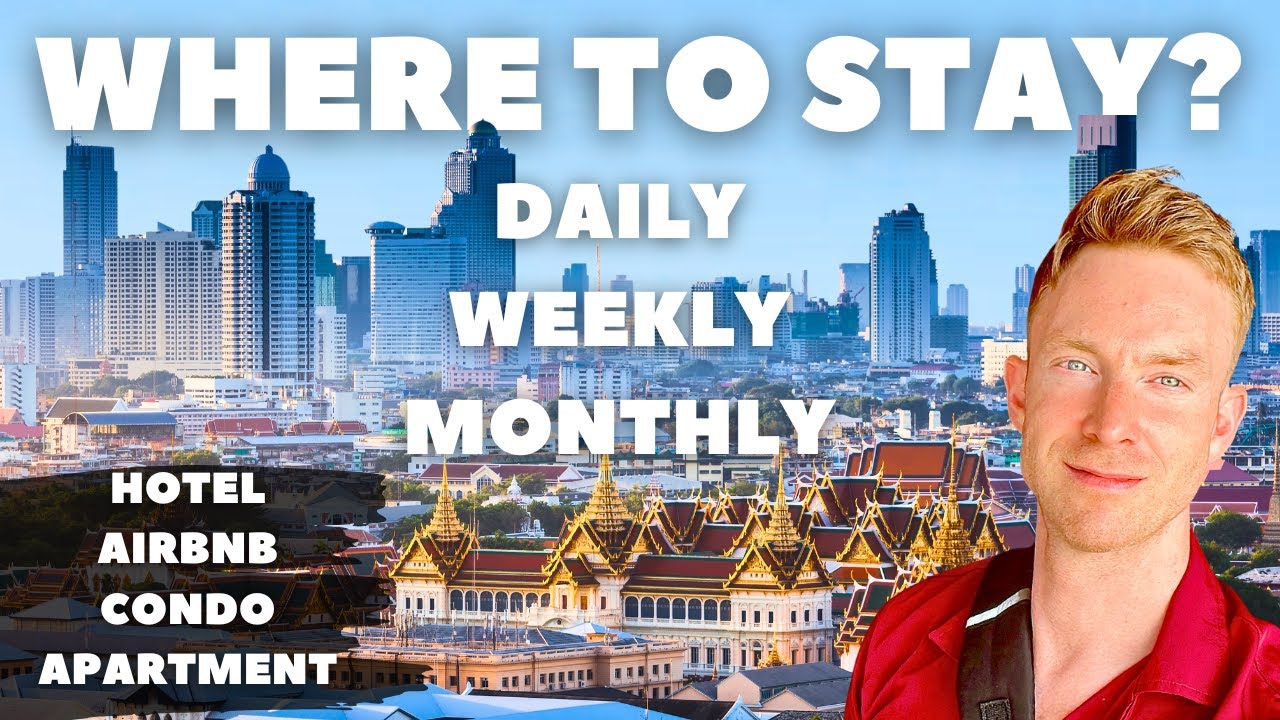
Filmed 24 Jan 2025. Rules and prices in Thailand change often: check entry rules right now and the daily news before you rely on anything here.
The short version
- For one to three months, a serviced apartment is the easiest fit. Condos are built for year-long leases, and nightly or weekly lets in them fall under hotel licensing (stays under 30 days).
- Whoever houses you must file the TM30 address report within 24 hours. Ask for the receipt on day one, because some immigration offices ask for it when you extend.
- Pay only a booking fee, and only to a verified office, before you sign. See the unit and meet the person who holds the keys first, and watch for fake agents and lease takeovers.
- Read the lease for the electricity and water rate, the deposit refund deadline and the move-out charges before you pay anything.
- Visa-free stays are limited to 30 days. Two months needs the one extension, and three months needs a tourist visa applied for before you fly.
Book a serviced apartment. Condos are let on year-long leases, and nightly or weekly lets in them fall under hotel licensing, so a one-to-three-month stay is easiest where a front desk files your paperwork.
Who this is for: anyone staying one to three months, such as remote workers testing Bangkok, retirees on a trial run or people between leases. Who should skip it: anyone staying under a week (book a hotel) or over six months (a normal condo lease is cheaper).
Sort the visa before the lease
Since filming: visa-free stays are now 30 days, not 60, for tourism only (see the entry rules board).
One extension is possible at an immigration office, at an officer’s discretion. So a two-month stay needs that extension, and a three-month stay needs a tourist visa applied for before you fly. The current rules are on the entry rules board, and Thailand visas: which one fits your stay sets the options side by side.
Why condos are a poor fit
Most condo units are let on 12-month leases, and agents are paid to find a year-long tenant. A six-month lease can sometimes be negotiated. One to three months rarely can, and an agent has little reason to bother.
The 30-day line
Thailand’s Hotel Act treats renting out rooms for stays of under 30 days as running a hotel, which needs a licence. Rentals of 30 days or more fall outside the Act. An ordinary condo unit has no hotel licence, so nightly and weekly lets in one sit in a legal grey zone, whatever the listing says. Rules on short lets can change, so check the current position.
The owner carries the legal risk. You carry the practical one. Many buildings screen visitors, and guards will question a guest who isn’t a registered resident. Some buildings tolerate short stays, and a few run under a hotel licence. Which kind you are in decides how your stay goes.
Airbnb-style booking sites
Booking sites are the obvious route, but they save little. Nightly prices track hotels, and monthly stays usually cost more per month than a long lease. For a condo, ask the host whether the building allows short stays before you book, because the risk of being turned away at the door sits with you.
A common complaint with multi-unit hosts is that the advertised unit isn’t free, and the key in the mailbox opens a poorer one. Cancelling and finding somewhere new on arrival is hard, so guests often put up with it. Read recent reviews for the exact listing, and message the host to confirm the unit before you fly.
The four options side by side
| Option | Legal footing and TM30 | The catch |
|---|---|---|
| Condo | No hotel licence; under 30 days is a grey zone. Owner files TM30. | Agents skip short stays. |
| Booking site | Same grey zone for condos. Confirm who files TM30. | You risk being turned away. |
| Serviced apartment | Single owner and office. Confirm TM30. | Older rooms, set utility rates. |
| Hotel | Licensed. Hotel files TM30. | Best under a week. |
The scams to watch for
Both of these start on social media groups. The scams guide covers the wider set.
- The lease takeover. A tenant who wants out of a lease offers you the unit. Watch for requests to transfer a deposit “to hold it”, after which the tenant vanishes. Others pass on a deposit that the landlord never knew about, so you cannot get it back.
- The fake agent. An agent shows you a real unit, takes a deposit and the first month’s rent, and hands over keys. A few days later the real owner arrives, says nobody paid, and the agent has gone.
What to do: never transfer money to someone you met through a group. See the unit and meet the owner or building office first. Pay only a booking fee, and only to a verified office, before signing. Ask the building’s management office to confirm you are registered as a resident.
Why serviced apartments work
An apartment building has a single owner and its own management office. That makes daily, weekly, monthly and annual terms possible, and the office handles contracts, repairs and your paperwork. Hotels file your TM30 for you. A serviced apartment normally does too, but confirm it.
The catch: the room is often older, the management sets the utility rates, and the price moves with the season.
Utilities are the hidden cost
Serviced apartments commonly bill electricity and water themselves. Some charge well above the rate the state electricity utility charges a household, and an old air conditioner turns that gap into real money.
Ask for the electricity and water rates in writing. Put the per-unit price in the lease, and ask to see the last tenant’s bill. Turn the air-conditioning on when you view.
Finding a place
- Choose the area first. Pick a spot within a short walk of a BTS or MRT station, near food and the places you’ll visit each week. A cheaper room that adds an hour of traffic a day is not cheaper. In the rainy months, avoid low-lying streets.
- Search the property-listing sites that cover serviced apartments, and set the filter to daily or monthly rentals. Some listings still demand a one-year lease after the filter, so read each one.
- Message on LINE. Most serviced apartments reply there. Install it before you fly.
- Shortlist five to ten, and view as many as you can in one day.
Treat a listing with missing details as a warning. A good one shows the monthly and three-month rates, the deposit, the electricity and water prices and the location on a map. Check the map pin: a listing can say one district and sit in another across the river.
What to check when you view
- The room itself. Photos are often old or shot with a wide lens. Look for smells, damp, insects and a working hot-water heater.
- The walls. Tap them. An echo means thin walls and noisy neighbours.
- The street. Look for construction, a busy road, and how the walk to the station feels in the heat.
- The internet. Serviced apartments usually include Wi-Fi, but older buildings can be slow, with a shared router per floor. You can rarely install your own line. A phone SIM with a large data plan, used as a hotspot, is the usual workaround.
Signing the lease
- Get the TM30 in writing. Ask the office to confirm it will file your address report.
- Pay a booking fee. It is non-refundable and takes the room off the market while the lease is drawn up. It is negotiable, and is often credited against your first month.
- Read the lease. Look for the electricity and water rates, move-out charges, a late-payment clause and the inventory. Ask for an English copy, and have the Thai text checked if the sum at stake justifies it.
- Sign, then pay the deposit and first month.
TM30: keep the receipt for your extension
The owner or hotel must report where a foreigner is staying within 24 hours of arrival, on form TM30. Some immigration offices ask for the TM30 receipt when you extend, so keep it with your passport. The TM30 guide explains how to check it and what to do if a landlord won’t file.
Your deposit
Deposits are where disputes start, though most apartments return them minus reasonable deductions. Three habits protect you:
- Photograph everything on move-in day, especially marks and damage.
- Check the inventory in the lease, down to the air-con remotes, fridge and washing machine, and confirm that every item is there and working.
- Agree the refund deadline in writing, and ask which deductions apply.
Don’t rely on a legal default for how soon a deposit comes back, because practice varies from building to building. Get the number of days into the lease. Before you commit, read recent reviews of the building for deposit complaints.
What to do next
- Decide your dates, then confirm the visa route that covers them.
- Book a few nights in a hotel or licensed serviced apartment near the area you like. View places in person from there.
- Shortlist serviced apartments, tour them in one day, and pay the deposit only after you have signed a lease, and ask for the TM30 receipt on day one.
Chapters
- 0:00Why short stays are hard to rent
- 0:39The condo market
- 1:18Lease takeovers
- 3:09The fake-agent scam
- 4:02Airbnb and the 30-day rule
- 5:27The bait and switch
- 5:52Why apartments suit short stays
- 7:01Utilities
- 8:02Finding an apartment
- 9:01Reading a listing
- 12:05Viewing the room
- 12:58Internet
- 13:43Signing the lease
- 14:56Your deposit
Watch next
 35 minCondo & house tours · $2,500/month · Written guideA 145 m² Soi 8 corner condo for 85,000 baht, down from 110,00028 Oct 2026
 33 minCondo & house tours · $750/month · Written guideA $750 condo in Phrom Phong, and the two-year lease that got it19 Oct 2026
 29 minCondo & house tours · $445/month · Written guideA $445 Phra Khanong condo: what a DTV nomad wants from a building14 Oct 2026
Thailand, every Thursday.
One email a week. Free, and you can leave in one click.
- What's on in Bangkok this weekend
- Entry and visa changes, in plain English
- One guide worth reading, kept up to date