
Guides · Stay · Bangkok
Where to stay in Bangkok: which neighbourhood suits which trip
Silom-Sathorn or Siam for a first trip, Phrom Phong over Asok for Sukhumvit, and Phra Khanong, On Nut or Ari if you're staying for months.
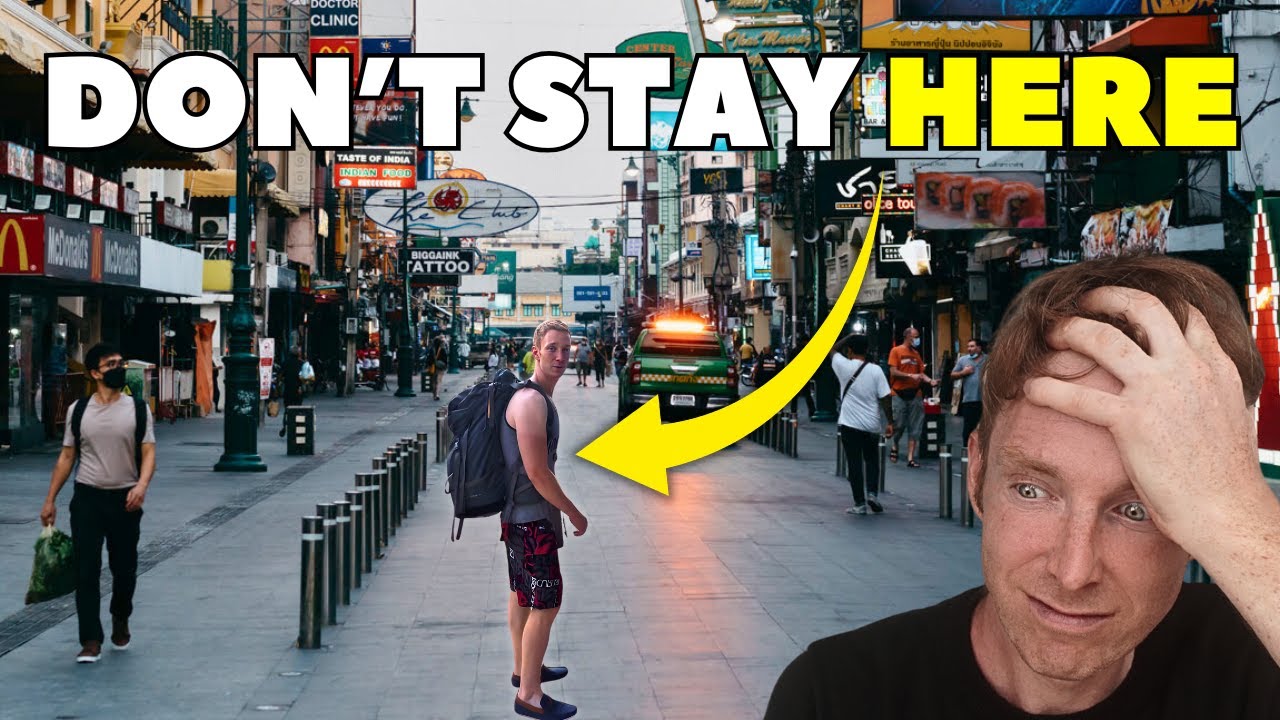
Earlier version: The 10 Best Areas to Stay in Bangkok: City Guide
Key things to know
- First trip: stay within a five-minute walk of a BTS or MRT station. Bangkok traffic decides your day otherwise.
- Best all-rounder: Silom-Sathorn, which has both BTS and MRT, Lumphini Park and the river ferry a few stops away.
- Easiest introduction: Siam. It's walkable, family-friendly and the priciest district for hotels, at about 5,700 baht a night on average.
- Lower Sukhumvit around Asok is the most convenient and the most hectic. Phrom Phong, one stop east, gives you the same access with fewer touts.
- Old Town and Khao San put you next to the Grand Palace but nowhere near the rail lines.
- Staying months, not days: Phra Khanong, On Nut and Ari rent one-bedroom condos for roughly 10,000 to 20,000 baht.
Stay near a train. That one rule matters more than the neighbourhood you pick, because a 4km taxi ride at 5pm can take longer than the walk. For a first trip, book in Silom-Sathorn or Siam. If you want Sukhumvit’s restaurants and malls, stay at Phrom Phong rather than Asok. If you’re here for months, skip the centre and rent in Phra Khanong, On Nut or Ari, where the same money buys a bigger, quieter flat.
Who this is for: first-time visitors choosing a hotel, and anyone planning a stay of a month or more who wants to know where to look for a condo.
Who should skip it: anyone heading straight to the islands with one night near the airport. Book by Suvarnabhumi or Don Mueang and sleep.
The short list for a first trip
| Area | Best for | Trains | Hotel spend | The catch |
|---|---|---|---|---|
| Silom-Sathorn | The full city in one base | BTS Silom line and MRT Blue | Mid | Quiet after dark in the business blocks |
| Siam | Families, first-timers, shopping | BTS interchange (both lines) | High | All malls; little street life of its own |
| Phrom Phong | Sukhumvit without the hassle | BTS Sukhumvit line | Mid to high | No MRT; one stop to change at Asok |
| Lower Sukhumvit (Asok) | Maximum convenience | BTS and MRT at one junction | Mid | Crowds, touts and scams aimed at newcomers |
| Riverside | Couples, slow mornings | River ferries, BTS Saphan Taksin | High at the top end | You live by the boat timetable |
| Chinatown | Food | MRT Blue, river ferry | Mid | Hot, loud and short on good hotels |
| Old Town and Khao San | Temples, backpackers | River ferry only; MRT Sanam Chai is about 2km from Khao San | Low | No rail to the rest of the city |
| Thonburi | Calm and cheap, near the river | BTS Silom line, Gold Line | Low | Few sights on your doorstep |
Hotel spend is relative. Bangkok hotels averaged 3,660 baht a night across the city in the second quarter of 2026. Pathum Wan, the district that holds Siam, was the most expensive at about 5,700 baht, and outer districts were the cheapest at about 1,800.
Silom-Sathorn: the best all-rounder
The verdict: if you can only pick one base, pick this.
Silom-Sathorn is the business district, and it works like one: wide pavements, both rail systems (BTS at Sala Daeng and Chong Nonsi, MRT at Si Lom and Lumphini), and Lumphini Park at the top of the street. The BTS Silom line runs to Saphan Taksin, where the Chao Phraya river ferries leave for the Grand Palace, Wat Arun and Chinatown, so the main sights are one change away.
Charoen Krung Road, the city’s first paved street, runs along the river edge with old family restaurants that have barely changed in decades.
Who it suits: first-timers who want a bit of everything, and anyone who hates long taxi rides.
The catch: the office blocks empty out at night and at weekends. Book near Sala Daeng or Charoen Krung, not deep in Sathorn’s towers.
Siam: the easy introduction
The verdict: underrated as a first base, especially with children.
Siam is where the two BTS lines meet. Skywalks connect the malls (Siam Paragon, Siam Center, CentralWorld), so you can cross the district without touching a road, and the pavements are some of the widest in the city. It feels safe and bright at any hour, and hotels run from hostels to five-star.
The catch: it’s expensive and commercial. The area’s charm is mostly indoors, and you’ll take the train out of Siam to eat well.
Lower Sukhumvit and Phrom Phong
The verdict: Asok is the most convenient spot in Bangkok and the most tiring. Stay one stop east.
Asok is the only junction in central Sukhumvit where the BTS meets the MRT, and the Airport Rail Link is one MRT stop away at Phetchaburi. Terminal 21 has one of the cheapest food courts in a city mall, and Benjakiti Park, with its forest walkways, is a short walk south.
The catch: the stretch from Sukhumvit Soi 1 to Asok is where newcomers meet the most touts, fake “friendly strangers” and inflated taxi quotes, and many Thai residents avoid it. Read the scams guide before you go.
Phrom Phong, one BTS stop east, keeps the access and loses most of the hassle. Benjasiri Park has an outdoor gym, the EmQuartier, Emporium and Emsphere malls sit by the station, and the side streets are full of Japanese restaurants.
The catch: no MRT. For Chinatown or the Grand Palace, you change at Asok.
Thonglor and Ekkamai
The verdict: a great place to eat and a poor base for sightseeing.
Thonglor (Sukhumvit Soi 55) and Ekkamai next door are the cafe, restaurant and live-music end of Sukhumvit, with a large Japanese community and some of the city’s best restaurants.
The catch: the tourist sights are an hour away by train and boat, and the long sois are a walk from the BTS. It suits a second trip or a long stay better than a first visit.
The river: Riverside and Thonburi
The verdict: the most peaceful part of Bangkok, if you’re happy to travel by boat.
The hotels along the Chao Phraya get river views, their own shuttle boats and easy ferry access to the Grand Palace, Wat Arun, Chinatown and ICONSIAM. The Mandarin Oriental, the Peninsula and the Capella are all on this stretch. Cross to Thonburi on the west bank and prices fall sharply. The streets are local, the pavements are calm and the BTS Silom line and the short Gold Line to ICONSIAM keep you connected.
The catch: the ferries stop in the evening, and the cheap orange-flag boats run only at weekday peaks. After dark, you’re back to taxis and apps. The getting-around guide has the current boat fares.
Chinatown
The verdict: a must-visit; a so-so place to sleep.
Yaowarat Road at night is one long street-food queue, with dim sum shops and stalls that have cooked the same dish for 50 years. The MRT Blue line stops at Wat Mangkon and the river ferry at Ratchawong, and the lanes of Talat Noi lead to galleries and street art.
The catch: it’s hot, noisy and crowded, and good hotels are thin on the ground. Many people visit from Silom or the river instead.
Old Town and Khao San
The verdict: worth a visit, rarely worth staying more than two nights.
Khao San Road is the backpacker street of Southeast Asia: cheap rooms, loud bars and easy company for solo travellers. It’s about 1km from the Grand Palace, so the Old Town’s temples, the Giant Swing and Democracy Monument are walkable.
The catch: the music runs late, and the area has no BTS or MRT. The nearest station, MRT Sanam Chai, is about 2km from Khao San, so you’ll lean on river boats, taxis and apps, and taxi and tuk-tuk drivers here are the most likely to quote silly prices. If you stay, pick a street a block or two away from Khao San itself, and move on by day three or four.
Staying a month or more
Hotels make sense for a week. For a month or longer, a serviced apartment or a condo on a short lease is cheaper, and the map changes. Most foreigners who move here start in central Sukhumvit and drift outward once they realise how much space the same rent buys three or four BTS stops further out.
| Area | Typical one-bedroom rent | What the tours found | The catch |
|---|---|---|---|
| Phra Khanong and On Nut | 10,000 to 18,000 baht | 15,000 to 18,000 baht for a 43m² one-bed with a pool | More of a commute to Silom |
| Ari | 12,000 to 20,000 baht | 16,000 baht for a 30m² one-bed by the BTS | Small supply of newer buildings |
| Rama 9 and Ratchada | 10,000 to 18,000 baht | About 9,000 baht for 40m² near MRT Rama 9 | Busy roads, rough pavements |
| Phrom Phong and Thonglor | 15,000 to 30,000 baht | 25,000 baht for 42m² after negotiating a two-year lease | You pay for the postcode |
| Asok and Lower Sukhumvit | 18,000 to 35,000 baht | 15,000 to 22,000 baht in older buildings | Newer towers cost far more per m² |
| Silom-Sathorn | 16,000 to 27,000 baht | Larger units listed at 52,000 baht and up | Few bargains near the stations |
The typical ranges are market asking rents for one-bedroom condos in reasonable buildings, as listed in 2026. The middle column is what residents paid in our condo and house tours; Bangkok rents from real tours has every one of them in a sortable table.
Phra Khanong and On Nut are the default for people who want Sukhumvit on a budget. Joseph, who moved from Australia, pays 15,000 baht at Life Sukhumvit 65 between Phra Khanong and Ekkamai. Anthony, from Southern California, pays 18,000 in the same building for 43m² on the 26th floor.
Ari is the local alternative: tree-lined sois, independent cafes and a quieter street life, five BTS stops north of Siam. Walker, from Florida, viewed about 30 condos between 16,000 and 30,000 baht before taking a 30m² unit by the station for 16,000.
Rama 9 and Ratchada are the value play on the MRT, two stops from Asok, with night markets and big malls nearby. An older 40m² one-bed near MRT Rama 9 was listed at about 9,200 baht in 2023.
Further out, houses get cheap. A Finnish resident rents a three-bedroom house in Lat Krabang, near Suvarnabhumi, for about €300 a month. The catch is the same everywhere outside the rail network: you’ll depend on a car, a motorbike or the apps.
Before you book
- Check the walk, not the station name. “Near BTS” in a listing can mean 15 minutes on a pavement-free soi. Open the map and measure it.
- Look up the street at night. Street View and recent reviews tell you whether your soi has bars, a market or a building site.
- Avoid the sois next to motorway ramps and canals if you’re sensitive to noise and mosquitoes.
- For long stays, view in person. Deposit scams are covered in the scams guide.
- Ask what’s included. Some condo buildings bill electricity above the state tariff, and a 4,000-baht power bill can come from one faulty air conditioner.
Thailand, every Thursday.
One email a week. Free, and you can leave in one click.
- What's on in Bangkok this weekend
- Entry and visa changes, in plain English
- One guide worth reading, kept up to date
Related guides
What's changed
| Date | Change |
|---|---|
| 25 Oct 2026 | First published |
Guidance, not legal, tax or immigration advice. Rules in Thailand can change with little notice; confirm with the official source before you travel.