
Guides · Move · Thailand
Moving to Thailand from the US: visa, IRS and Social Security
Thirty days visa-free is a holiday, not a move. Which long-stay visa fits, what you still owe the IRS, how Thailand taxes your income and what Medicare won't pay for.
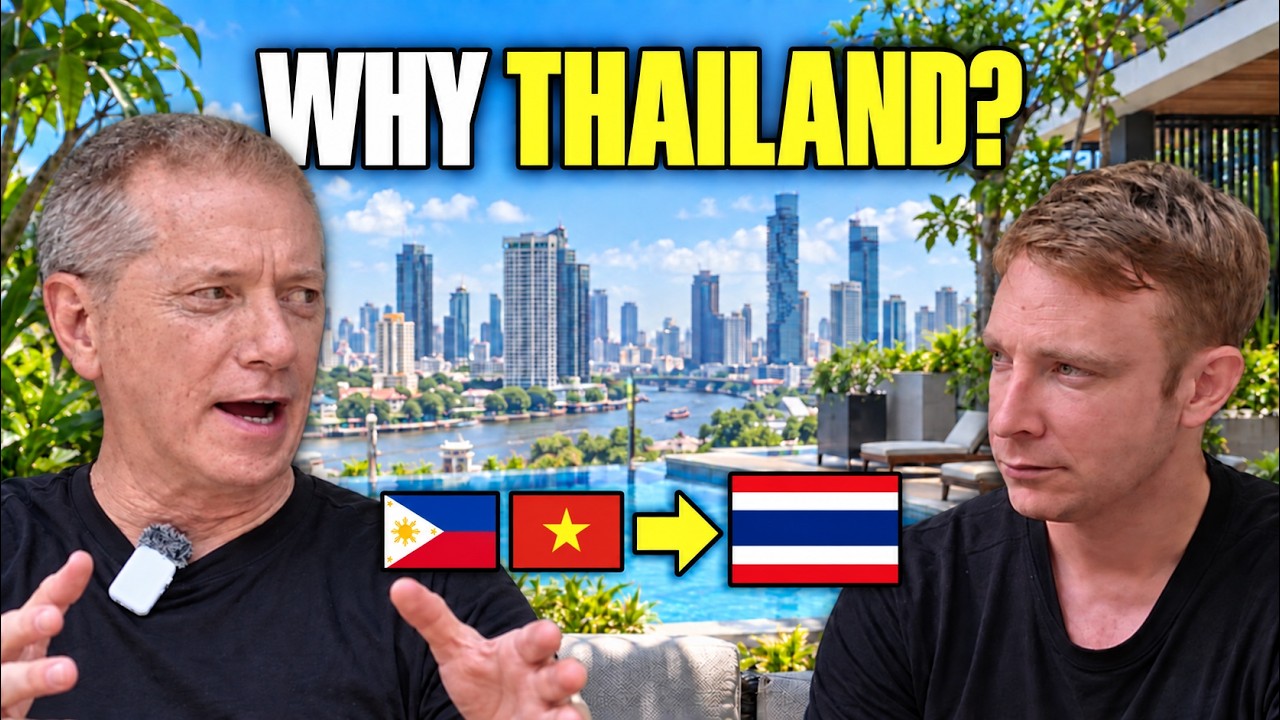
Earlier versions: American Couple Retired in Bangkok: Inside their $2,500/month Luxury Condo, Retired Military Couple Left Florida for Thailand — Inside Their $1,500/Month Bangkok Home, He Left Texas to Retire Early in Thailand: Inside His $2,350 Condo
Key things to know
- Americans get 30 days visa-free for tourism since 15 September 2026. Living here means a long-stay visa: the retirement Non-O or O-A from 50, the DTV for remote workers, or the LTR.
- You still file a US return every year. Living abroad moves the deadline to 15 June automatically, and the foreign earned income exclusion shelters up to $132,900 of 2026 wages or self-employment income.
- Foreign accounts that add up to more than $10,000 at any point in the year mean an FBAR. Form 8938 starts at $200,000 at year end for a single filer abroad.
- Spend 180 days or more here in a year and Thailand can tax foreign income you bring in. Under the US treaty, Social Security is taxed only in the US; IRA and 401(k) money is generally taxable here when you bring it in.
- Social Security pays you here, by direct deposit to a participating Thai bank or a US one. Medicare doesn't cover care in Thailand, so you need private insurance.
- A comfortable single life in Bangkok runs about $1,500 a month; Chiang Mai is cheaper, the islands dearer.
An American moving to Thailand needs two things sorted before signing a lease: a long-stay visa, because 30 days visa-free is a holiday, and a plan for the US tax return you’ll keep filing every year.
Most Americans who live here hold a retirement visa (from 50), a Destination Thailand Visa (remote workers) or a Long-Term Resident visa. And from your 180th day here in a calendar year, Thailand gets a say in the money you bring in.
Who this is for: US citizens planning to live in Thailand for six months or more, working remotely or retired. Green-card holders: an absence of a year or more can cost you the card, so get a re-entry permit before you leave.
Who should skip it: anyone planning a few weeks’ holiday. Read the entry rules instead.
The visa that fits
| You are | The usual route | The money test | The catch |
|---|---|---|---|
| 50 or over, retired | Non-O retirement, then one-year extensions | 800,000 baht (about $24,000) in a Thai bank. 65,000 baht ($1,940) a month in income qualifies on paper, but the income route isn’t widely accepted | The 800,000 goes in two months before you apply and stays three months after; then it can fall, but never below 400,000 |
| 50 or over, arriving ready | Non-O-A from a Thai embassy in the US | The same, plus health cover of 3 million baht (or $100,000) | You apply from home, with a police check and medical certificate |
| Working remotely for clients abroad | Destination Thailand Visa (DTV) | 500,000 baht ($15,000) in savings | You apply from the US, with a police clearance; 180 days per entry, and no work for Thai clients |
| Retired, 50 or over, with a good pension | Long-Term Resident (LTR), Wealthy Pensioner | $80,000 a year in pension or passive income, or $40,000 plus $250,000 invested in Thailand | 50,000 baht for ten years; you’ll prove the income with US tax returns |
| Remote worker on a high salary | LTR, Work-from-Thailand Professional | $80,000 a year in earned income ($40,000 with a master’s degree), and an employer that passes a size test | Passive income doesn’t count on this route |
Dollar figures are at 33.5 baht to the dollar. The visa guide has every option and fee, and the retirement guide walks through the Non-O timetable.
Kathy and Hank, a retired American couple in Bangkok, chose the LTR. Their advice: start at least a year before you plan to arrive, because your US tax return has to show the income, and check whether the income test applies to each of you separately; confirm it with the Board of Investment before you plan around it.
What you still owe the IRS
Moving abroad doesn’t end US tax filing. The United States taxes its citizens wherever they live; what changes is the deadline, and you get two big ways to avoid paying twice:
- The deadline. Living abroad on 15 April gives you an automatic two months, to 15 June. You can still extend to 15 October, but interest on any tax owed runs from April.
- The foreign earned income exclusion. Wages or self-employment income earned while you live abroad can be excluded up to $132,900 for 2026, per person, on Form 2555. You qualify by being outside the US for 330 full days in any 12 months, or by being a bona fide resident of Thailand. It doesn’t cover pensions, Social Security, dividends or capital gains, and it doesn’t cut self-employment tax.
- The foreign tax credit. Thai tax you pay can usually be credited against the US tax on the same income, which matters once Thailand starts taxing what you bring in.
Reporting your Thai accounts
| Form | You file it if | Due |
|---|---|---|
| FBAR (FinCEN Form 114) | All your foreign accounts together topped $10,000 at any point in the year | 15 April, automatically extended to 15 October |
| Form 8938 | Foreign financial assets of $200,000 at year end or $300,000 at any time (single, living abroad); $400,000 / $600,000 married filing jointly | With your tax return |
Your Thai bank account counts. So does a Wise balance held outside the US. Penalties for a missed FBAR can run to thousands of dollars, so file it even in a year you owe no tax.
State tax: some states keep treating you as a resident after you leave, especially if you keep a home, a driver’s licence or voter registration there. Check your state’s domicile rules before you decide which of those to keep.
How Thailand taxes Americans
Under 180 days a year, Thailand taxes only Thai-source income. From 180 days, it can tax foreign income you bring into the country, and the US treaty decides which kinds.
You become a Thai tax resident for any calendar year in which you spend 180 days or more here, whatever your visa. Since 2024, a resident’s foreign income is taxable when it’s brought into Thailand. A proposal to exempt foreign income brought in during the year it was earned or the next one was still not law in November 2026, so plan on the current rules.
| Income | Under the US–Thailand treaty |
|---|---|
| Social Security | Taxed only in the US. Bring it in tax-free. |
| US government pensions (federal, military) | Taxed only in the US |
| Private pensions, IRA and 401(k) withdrawals | Generally taxable in Thailand when a resident brings them in. The US taxes them too; claim the foreign tax credit |
| Wages from work you do while in Thailand | Thai-source income, taxable here whether or not you bring it in; the US exclusion or credit applies on your US return |
A treaty can bring your Thai tax to zero and still leave you needing to file a Thai return. Money and tax in Thailand covers the 180-day count, the filing deadline and worked examples.
Social Security and Medicare
Social Security keeps paying you in Thailand. You can have it sent by international direct deposit to a participating Thai bank, converted to baht on arrival, or keep it going to your US account and move money across yourself. Benefits questions for people living in Thailand are handled by the Federal Benefits Unit at the US Embassy in Manila, not the embassy in Bangkok.
The switch takes a few weeks, and the name on the Thai account must match your Social Security record exactly. Keep your US account open until the first deposit to the Thai bank has landed.
Medicare doesn’t cover you here. It pays for almost no care outside the US. Most Americans buy a Thai or international health plan, and the healthcare guide compares them.
Whether to keep Part B is the hard call. The standard premium is $202.90 a month in 2026, and if you drop it and sign up again later, a permanent penalty of 10% is added for each full 12 months you were without it. If you might move back or spend long stretches in the US, many people keep it.
Medicare Advantage plans need a US address, so switch or drop yours before you go. Part D drug cover has its own late-enrollment penalty, so decide on it at the same time.
Money and banking
- Keep a US bank account and a US address you can legitimately use. Some US banks and brokerages restrict accounts with a foreign address, so ask yours before you change it.
- A Thai bank account needs a one-year visa in practice, such as the retirement Non-O or the LTR. On a visa exemption, tourist visa or DTV, banks usually say no.
- Move money with a transfer service rather than a US bank wire, for the exchange rate. Money and tax in Thailand compares the options.
What a month costs, in dollars
A single person lives comfortably in Bangkok on about 50,500 baht, roughly $1,500 a month, with a one-bed near the BTS, private insurance and restaurants a few nights a week. Americans we’ve filmed in Bangkok pay anywhere from about $500 to $2,500 a month: Jade pays 39,000 baht (about $1,160) for her Ploenchit condo, and Kathy and Hank $2,500 for a 145-square-metre corner unit on Sukhumvit Soi 8.
Price your own household in six cities with the city comparison tool, or see every line of the Bangkok budget in what it costs to live in Bangkok.
Before you fly
- Get an International Driving Permit from AAA if you’ll drive. Carry it with your US licence; if you settle here, convert to a Thai licence.
- Check your appliances. Thailand runs on 220 volts. Phone and laptop chargers are fine; most US-only appliances aren’t. Furnished rentals are the norm, so you rarely need to ship furniture.
- Enrol in STEP (the State Department’s Smart Traveler Enrollment Program) so the US Embassy in Bangkok or the Consulate General in Chiang Mai can reach you.
- Sort your vote. You can keep voting in federal elections from abroad: request an absentee ballot each year with the Federal Post Card Application. If you’re cutting ties with a high-tax state, check which state you vote in.
- Bring your paperwork: the passport with at least six months left, bank statements for the visa, and your last two US tax returns if you’re going for the LTR.
The free Move Planner turns your age, income and timeline into a likely visa route, a budget and a dated checklist.
Rules this guide relies on
Changed recently Visa-free stay: 30 days, tourism only changed 15 Sept 2026
Useful next
Some links here earn us a commission. It never changes what we show, the order or how we describe it. How this works
- WiseSend money from home to a Thai account at the mid-market rate, with the fee shown up front.
- Home FinderFree matches for condos and houses in Bangkok, Pattaya, Chiang Mai, Phuket and Hua Hin, picked from your budget, area and move date.
- Echo ThaiLearn the Thai you'll actually use, with real voices and tone practice.
Thailand, every Thursday.
One email a week. Free, and you can leave in one click.
- What's on in Bangkok this weekend
- Entry and visa changes, in plain English
- One guide worth reading, kept up to date
Related guides
What's changed
| Date | Change |
|---|---|
| 10 Nov 2026 | First published |
Guidance, not legal, tax or immigration advice. Rules in Thailand can change with little notice; confirm with the official source before you travel.