
Videos · Interviews · 17 Sept 2026 · 46 min
Stuart Jay Raj on why Thailand bends for foreigners, then snaps back
Linguist Stuart Jay Raj on the social system under Thai life, why the rules on foreigners swing back and forth, and how to fit in without going viral.
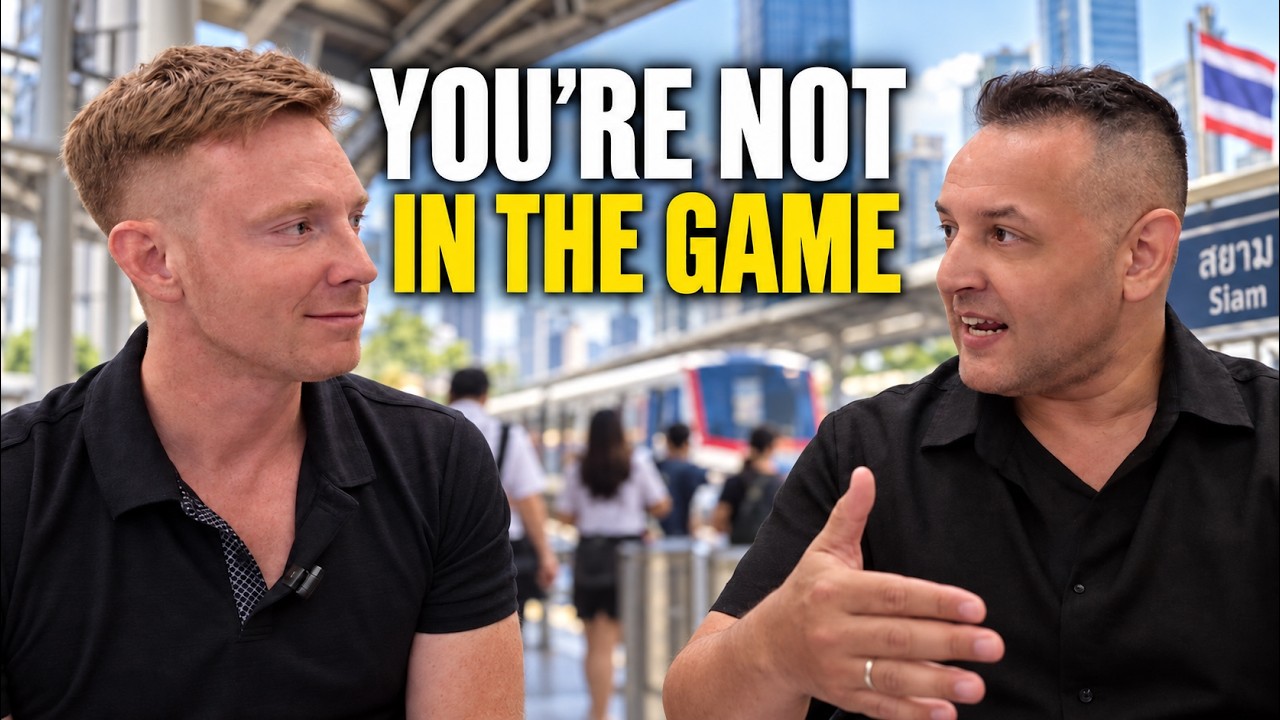
Video: What Thai People Really Think About Foreigners — Stuart Jay Raj Explains
The short version
- Thai society still runs on hierarchy and networks: surnames, pronouns and who-knows-who tell Thais how to speak to you.
- Feeling 'not judged' as a newcomer often means you're simply not part of the system yet.
- Stuart's 'bamboo' idea: Thailand bends to welcome foreigners, then snaps back when people push too far. The nominee crackdown and visa changes are the snap back.
- Kala-thesa, 'time and place', is the foundation. Loud behaviour on the BTS is exactly the wrong time and place.
- In his view retiring here is much harder than it's sold: insurance is expensive and often excludes outpatient care.
- Culture matters more than language. If you do learn Thai, learn the system properly, reading and tones included.
Hand a Thai person your business card and they may learn more from it than you meant to tell them. Since the Surname Act of 1913, no two unrelated families may register the same surname, so the name on the card can tell a Thai reader whose network you belong to, and even your likely politics. Most foreigners never find out what their own card says about them.
Stuart Jay Raj has spent more than 30 years reading Thailand from that side of the table. He has been a permanent resident since about 2000–01, hosted on Thai TV’s Channel 5, interpreted for Miss Universe, speaks a dozen or more languages and wrote Cracking Thai Fundamentals.
His argument is unwelcome to a lot of newcomers. The visa changes, the nominee crackdown and the anger at foreigners behaving badly on the BTS are one story, he says, and it can’t be read with Western rules. For anyone planning to live here, or retire here, that matters more than any single regulation.
The system under the surface
Stuart quotes a Thai saying: go somewhere for seven days and you can talk about it for seven years; live there for seven years and you can hardly say a thing. Much of the online commentary about the latest visa change, he says, is the seven-day kind.
What hasn’t moved is the structure underneath.
- Surnames took over from rank. Under the old sakdina system, status was a number tied to land. As that system faded, the family name took over much of its work.
- Pronouns map the relationship. Whether someone refers to a person as than, phi or nong tells you at once where the power lies and how to speak about them.
- Your sen is your network. It’s the same word as a strand of noodles: the lines of people around you.
Newcomers often say they love not being judged here. Stuart’s reply is that the opposite of love might be apathy. You’re not judged because “you’re not even in the game”.
What farang means, and what it doesn’t
Farang usually means a light-skinned Westerner. It isn’t an insult in itself, and it carries both kinds of stereotype: well-off with a good job, or stingy and loud. The everyday words for South Asian, Muslim and Chinese visitors carry far heavier stigma, and Stuart’s family has met it too, because of the surname Raj.
He has also watched that change. At an event shortly before this interview he sat in a group of 13 people from many backgrounds, all arguing about religion, philosophy and economics in Thai, their one shared language. Some were Thai-born and didn’t “look Thai”. “This is a shift we’ve seen that probably wouldn’t have happened 20, 30 years ago,” he says.
Bamboo diplomacy
His frame for 2025–26 is bamboo diplomacy: Thailand bends a long way to accommodate outsiders, then whips back.
- In the late 1800s, pressed by Britain and France, Siam built a Western-style legal code with a Belgian adviser’s help. Stuart calls it a “crust” over the older system, which kept running underneath.
- In recent years people pushed too far: nominee companies cutting Thais out, hotels run remotely from abroad, grey money from scam centres, land bought on false papers. The law is the tool for the swing back, and the cut in visa-free stays from 60 days to 30 is part of it.
- Policy and enforcement come from different places. The DTV came out of one part of the system; immigration and the police enforce the rules, and they don’t always agree. Departments run, in effect, as separate fiefdoms.
Stuart earned permanent residency the slow way, through his own business rather than visa runs, and never bought land through a nominee. Of the shortcuts, he says: “One day it’s going to whack you.”
Kala-thesa: time and place
The foundation, he says, is kala-thesa, from the Sanskrit for time and place. Knowing what fits the moment is basic common sense to Thais, which is why the widely shared video of foreign students being loud on a quiet BTS carriage landed so badly.
“There’s a time and a place, and you’ve got to know. The BTS is not a time for you to be shouting.”
— Stuart
Everyone now has a camera, and younger, middle-class Thais are far more willing to call bad behaviour out than they once were. “The position of the expat is not elevated at all anymore,” Stuart says.
The case against retiring here
On retirement he is blunt: “I think retiring in Thailand is a terrible idea,” at least as it’s usually sold.
- Insurance is expensive, and many local policies don’t cover outpatient visits. Samitivej, Bumrungrad and Bangkok Hospital aren’t cheap.
- You give up home healthcare. Canadians, Brits and Australians also give up a universal system they’ve paid into all their lives, just as they’re likely to need it.
- Costs have risen. Families like his, he says, need 200,000–300,000 baht a month to live as they’re used to, international school fees included, and those schools are now mostly filled by Thai families.
What to do: before you plan a retirement here, price health insurance at your age, check what it excludes and budget for outpatient care. Healthcare in Thailand compares the plans, and retiring in Thailand covers the visa and the budget.
Fitting in
- Do your homework. Thais don’t expect you to know everything, but some things count as common sense.
- Stay out of the bubble. Enclaves of foreigners, as on some islands, are part of what’s driving the backlash.
- Culture beats language. Stuart knows people with Thai citizenship whose Thai isn’t great but who are plainly part of Thai life.
- If you learn Thai, learn the system: the sounds, the script and the tones, not just survival phrases. People judge you by how you speak far more here than in the West.
- Dress for it. Wear a shirt in the street, even when running, and a collar when you can.
None of it, in Stuart’s telling, is new. The crust still sits on the old system, and the bamboo is still doing what bamboo does.
“Do not use your Western system, your Western rules to judge what’s going on on the ground here, because if you do it’s going to be miserable.”
— Stuart
Watch next
 35 minCondo & house tours · $2,500/month · Written guideA 145 m² Soi 8 corner condo for 85,000 baht, down from 110,00028 Oct 2026
 28 minGuides · Written guideYour first hour in Bangkok: Suvarnabhumi arrival, step by step23 Oct 2026
 33 minCondo & house tours · $750/month · Written guideA $750 condo in Phrom Phong, and the two-year lease that got it19 Oct 2026
Thailand, every Thursday.
One email a week. Free, and you can leave in one click.
- What's on in Bangkok this weekend
- Entry and visa changes, in plain English
- One guide worth reading, kept up to date