
Videos · Guides · 27 Dec 2024 · 20 min
Renting a condo in Thailand: the lease terms that decide your deposit
Pay two months' deposit on a one-year lease, and get the TM30 receipt and a dated inventory in writing before you hand over the booking fee.
Video: Renting a Condo in THAILAND - 25 Things you NEED to Know
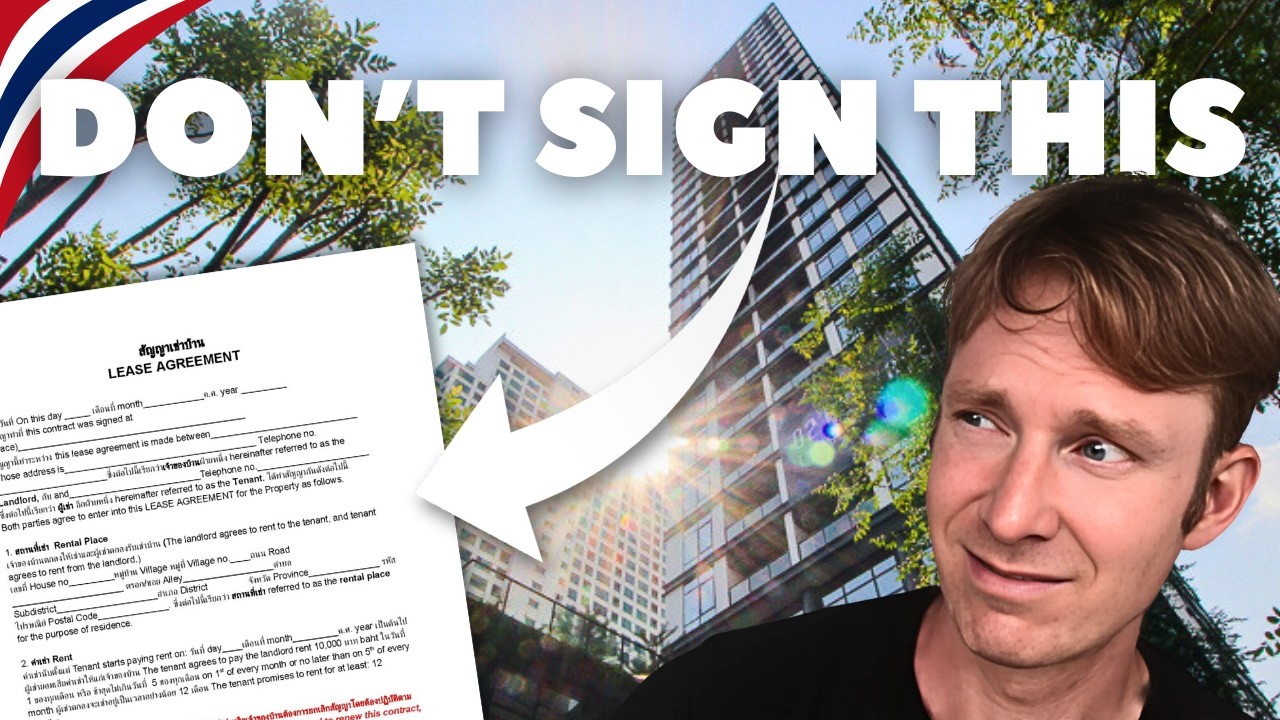
Filmed 27 Dec 2024. Rules and prices in Thailand change often: check entry rules right now and the daily news before you rely on anything here.
The short version
- The standard deal is a one-year lease, a deposit of about two months' rent and one month paid in advance. Six-month leases exist but cost more.
- Put every term in the memorandum of understanding before you pay the booking fee, which is normally one month's rent and not refundable.
- Ask for the TM30 receipt on move-in day. The landlord must file it, but without it immigration can refuse your visa extension.
- Photograph every scratch and attach the inventory to the lease. That is what your deposit refund is judged against.
- A residential-lease notification in force since early September 2025 sets refund periods for deposits. Ask whether it covers your unit and read the refund period in your lease.
- A condo usually bills electricity and water at the authority rate. Many serviced apartments add a markup, so ask for the per-unit price in writing.
- Ask for a discount on a new listing, but a well-priced unit can go the same day.
Take a one-year lease through an established agent, pay about two months’ deposit, and do not hand over a booking fee until every term is written in the memorandum of understanding. Check three documents before you move in: the inventory, the Thai and English leases (they must match) and the TM30 receipt.
Who it’s for: anyone about to sign a long-term lease on a condo or serviced apartment in Thailand, mainly Bangkok. Who can skip it: holiday renters staying a few weeks. Book a hotel or serviced apartment instead; most condo landlords want six months at the least.
The lease: length, deposit and the law
One year is the standard. Most landlords will only sign 12 months. Six months is possible if you negotiate it with the owner, and you will often pay a higher monthly rent for it.
Two months’ deposit, one month in advance is the usual opening position. You pay it when you sign, and the owner holds the deposit until you leave.
Leases over three years need registering. Under section 538 of the Civil and Commercial Code, a lease of immovable property for more than three years must be in writing and registered with the Land Department, or it is enforceable for three years only.
For a normal one- or two-year rental this never comes up. If an owner offers you five years, check with a lawyer first.
Stamp duty is small, and it’s the landlord’s. The Revenue Department sets duty on a building lease as a tiny fraction of the rent over the whole term, payable by the lessor. Check the current schedule with the Revenue Department or a lawyer.
Deposit refunds
A residential-lease notification from the Office of the Consumer Protection Board has been in force since early September 2025 and sets refund periods for deposits. Ask your agent whether it covers your unit, and read the refund period in your lease.
The catch: the law gives you little shortcut if a landlord holds your money. Your real protection is the paperwork: a signed inventory, dated photos and a written refund period.
Agent or do it yourself?
Use an agent if you’re new. Tenants often don’t pay the agent; the landlord usually pays the agency a fee, often around a month’s rent. That fee is also why going direct can win you a little room on price.
What an established agent does for that fee:
- Uses a standard lease that follows common practice for foreign tenants, and checks that the English and Thai versions say the same thing. Ask which one prevails if they differ.
- Checks and photographs the inventory and any existing damage before you move in.
- Handles the TM30 (see below).
- Sets up a LINE group chat with you and the landlord for repairs and questions.
The catch: agents vary widely in quality, and anyone can list on the property listing sites. Choose a company with a long trading record and referrals from tenants you can ask. Read reviews, but treat a few glowing or furious ones with caution.
Going direct means walking into a building’s juristic office (the condo management office) and asking whether any units are free. Some offices are helpful, some have a resident agent, and some will simply say no. If you go this way, have a Thai speaker read the Thai lease, and make sure the owner files the TM30 and ask for the receipt.
Finding the building
Start browsing the main property listing sites about two months before you want to move. Use them to build a list of buildings, not to chase individual listings: many units shown are no longer available, and listings are refreshed to look new. Then visit the buildings, or hand your list to an agent.
TM30: the form that catches tenants
The TM30 tells immigration where a foreigner is staying. The law puts the duty to file it within 24 hours on the owner or the person in charge of the home, and an agent normally does it for you. Without the receipt, immigration can refuse your visa extension; ask the immigration office whether it wants the TM30 for other services.
Whether you need a fresh TM30 after each trip abroad varies by immigration office, so ask your agent to confirm with yours. The TM30 guide has the details, and the 90-day report guide explains why the receipt matters.
Whichever route you take, get the receipt on move-in day, and write it into the lease.
Condo or serviced apartment?
A condo has a different owner for each unit. A serviced apartment has one owner for the whole building. The difference shows up on the bill.
| Condo | Serviced apartment | |
|---|---|---|
| Electricity and water | Usually at the authority’s rate | Often marked up, or an allowance with extra charged above it |
| Wi-Fi | Normally yours to arrange | Often included, but can be slow in older buildings |
| Landlord | An individual owner, via an agent | The building operator |
Ask the building to put the per-unit price for electricity and water in the lease. The electricity tariff for homes is set by the Energy Regulatory Commission and billed by the Metropolitan Electricity Authority in Bangkok and the Provincial Electricity Authority elsewhere: expect roughly 3 to 4 baht a unit before VAT. The rate resets every four months, so check the MEA or PEA site.
A condo billing you well above the figure on the authority’s own tariff page is marking it up.
What comes with the unit
Furnished is the default. Beds, sofa, TV, appliances and often kitchenware come with the unit. Unfurnished condos are rare, and owners usually have nowhere to store the furniture, so asking them to remove it can end the conversation.
Changes need written permission. That covers moving furniture out, painting and even hanging a picture, because of the wall damage. If you want something changed, put it in the memorandum of understanding.
Internet and cable are yours to arrange. Cancelling them when you leave is also your job. Ask the building which operators serve it, then go to the operator’s shop, usually in a mall, with your passport and the signed lease and book the technician.
Pets are usually banned. Pet-friendly buildings often set a weight limit, and you still need the owner’s written permission.
From viewing to keys
Documents. Expect to give copies of your passport photo page, visa and entry stamp. Some landlords also ask for a work permit. Tell an agent your visa situation first so they only show you units whose owners will accept it.
Booking fee and memorandum of understanding. To take a unit off the market while the lease is drafted, you normally pay a booking fee of about one month’s rent and sign a memorandum of understanding (MOU) with the owner. The MOU lists every term the lease will contain.
- Negotiate everything before you pay. The booking fee is normally not refundable.
- The fee becomes your first month’s rent when you sign the lease, which is usually drafted within a day or two.
- Put your changes in the MOU, such as a painted wall, an extra key or a shorter term.
Read the lease. Most are templates plus the MOU terms. Look for:
- The late-payment clause. A flat daily fee adds up quickly.
- Guest and landlord-access clauses. If anything looks odd, ask for it to be removed; this is a normal request.
- The inventory, down to the TV and air-con remotes, bedding and kitchenware. Run every appliance and flush every toilet before you sign.
- Who pays what, including the TM30.
Repairs and moving out
Who fixes what. If something fails without your fault, such as a fridge that stops, the landlord pays. Damage you cause is yours.
Small jobs such as a light bulb or a leaky tap may be yours too if the lease says so. Report problems in the LINE group straight away; buildings usually have a handyman on site and most fixes are quick.
Schedule an air-con clean every six months; the handyman usually does it.
To move out, tell the agent or landlord one to two months ahead. The unit is checked against the move-in photos and inventory, damage beyond normal wear is itemised, and the balance is returned.
- Expect some argument over repair prices. There is no standard scale and quotes can run high. Ask for itemised costs.
- Don’t pay for ordinary wear. An agent should push back on this for you.
- Your best evidence is the dated photo set you took on move-in day.
Breaking a lease, renewing and getting a better price
Leaving early usually costs the deposit. Two clauses can soften that, if the owner agrees: a replacement-tenant clause, or, for embassy staff, a diplomatic clause allowing you to leave if you are posted abroad. Most owners refuse the first, because their price assumes one tenant for a year.
Renewing. Tell the landlord about a month before the term ends, and check the notice period in your lease. You normally sign a new lease; some owners allow month to month after the first year.
Negotiating. Most owners will talk. They will trade price against lease length, and some will agree to six months. Decide what matters most and ask for that.
- Overpriced units sit empty for months. Do not rush into one.
- Well-priced units go fast, often at the asking rent and sometimes the same day.
- Many tenants try for a discount on a new listing. If a unit looks right, don’t haggle for a week.
For what homes across Bangkok really cost, see rents from real tours. For a shorter walk-through of the process, see Renting a condo in Bangkok: 11 simple steps.
Paying rent, bills and fees
Rent. A Thai bank account makes it a simple transfer. Without one, pay through an international transfer service, or withdraw cash at an ATM, deposit it in the landlord’s account and give them the slip.
Paying several months or a year upfront is possible but is not a discount you are owed; each landlord decides.
Utilities are normally delivered to your mailbox. You can pay:
- In your bank’s app or the provider’s app, if you have a Thai account.
- At a 7-Eleven counter, by cash or card, by showing the bill; the shop may charge a small fee.
- Water bills are often collected by the juristic office, in cash.
- Internet, cable and phone at the provider’s shop or in its app.
Common-area fees (the building’s monthly management charge) are normally the owner’s. It is unusual for a tenant to pay them. If a landlord asks you to, treat it as part of the rent and negotiate.
Before you sign
- Get the TM30 receipt on move-in day, filed by the owner or agent.
- Check the Thai and English leases match, and which one prevails.
- Attach the inventory and dated photos to the lease, and check the deposit refund period.
Chapters
- 0:00The lease: length, deposit and the law
- 3:12Agent or do it yourself?
- 4:20TM30: the form that catches tenants
- 6:47Condo or serviced apartment?
- 7:27What comes with the unit
- 10:20From viewing to keys
- 13:28Repairs and moving out
- 14:16Breaking a lease, renewing and getting a better price
- 16:40Paying rent, bills and fees
Watch next
 35 minCondo & house tours · $2,500/month · Written guideA 145 m² Soi 8 corner condo for 85,000 baht, down from 110,00028 Oct 2026
 33 minCondo & house tours · $750/month · Written guideA $750 condo in Phrom Phong, and the two-year lease that got it19 Oct 2026
 29 minCondo & house tours · $445/month · Written guideA $445 Phra Khanong condo: what a DTV nomad wants from a building14 Oct 2026
Thailand, every Thursday.
One email a week. Free, and you can leave in one click.
- What's on in Bangkok this weekend
- Entry and visa changes, in plain English
- One guide worth reading, kept up to date